
Empowering Caregivers with AI: A Scalable Caregiver Training Model in Daily Living Skill Interventions for Individuals with Intellectual and/or Developmental Disabilities
What's the study about?
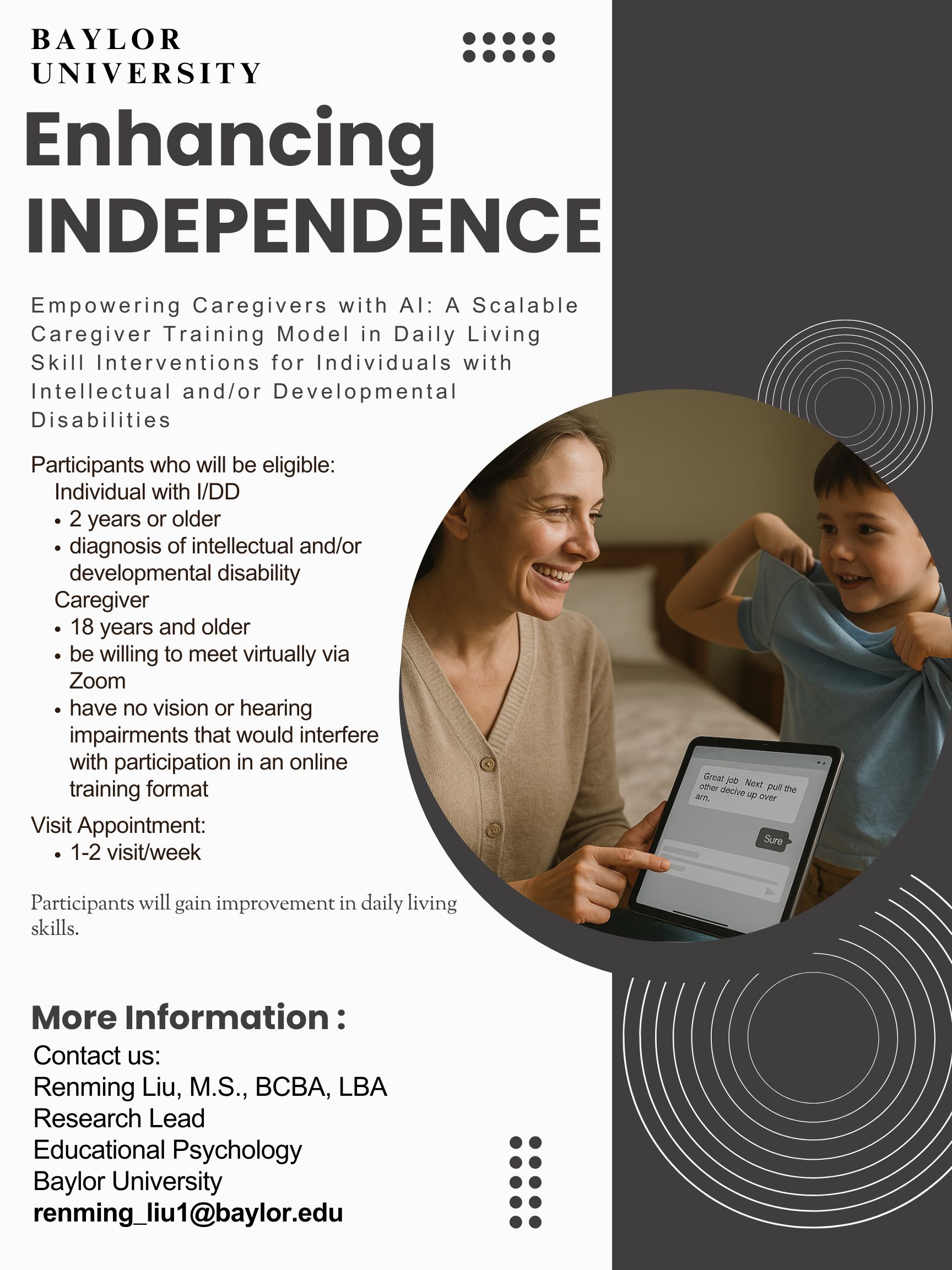
This study examines an AI-supported caregiver training program designed to support individuals with intellectual and developmental disabilities (I/DD), including autism, in learning daily living skills. Caregivers will complete online training modules and receive virtual coaching with AI-generated feedback on how to use evidence-based teaching strategies at home. The program also explores how artificial intelligence (AI) tools can support caregivers in implementing these strategies with their child with autism or other developmental disabilities. The study is conducted remotely via Zoom, and participation typically lasts about 6–8 weeks. The goal of this research is to evaluate whether this technology-supported caregiver training model can equip caregivers with practical skills they can use beyond the study, while helping improve independence in daily routines for individuals with I/DD.
Who can participate?
Caregivers and individuals with intellectual and/or developmental disabilities (I/DD), including autism, are eligible to participate. The individual with I/DD must be 2 years of age or older and live with a caregiver who is willing to participate in the online training. Caregivers must be 18 years of age or older, live in the United States, and have access to the internet and a device that can connect to Zoom for virtual meetings.
What will participants be doing?
Caregivers will complete online training modules and meet virtually with the research team through Zoom. During the study, caregivers will learn and practice evidence-based strategies for teaching daily living skills (such as self-care or household routines) to the individual with I/DD at home. The study will also use AI-supported tools to provide feedback and support for caregivers as they implement these strategies. Participation typically lasts about 6–8 weeks, with approximately one to two virtual meetings per week.
Why is this important?
Many families have limited access to training and support for teaching daily living skills at home. This study aims to develop and evaluate a scalable caregiver training model that uses technology and artificial intelligence to make evidence-based intervention strategies more accessible. The results of this research may help improve independence in daily routines for individuals with I/DD while providing caregivers with practical skills they can continue using beyond the study.