
Qualitative Exploration of the Female Autism Phenotype in College-Aged Individuals
What's the study about?
Autism spectrum disorder (ASD) has traditionally been observed and understood through a male-centered lens, leading to the underdiagnosis, misdiagnosis, and late diagnosis of females. This work explores the concept of the female autism phenotype (FAP) by highlighting how differences in characteristics such as social behavior, communication, and coping strategies often mask autistic traits in females. It examines the clinical, diagnostic, and societal factors contributing to these disparities and considers emerging research aimed at improving recognition and support. The study calls for more inclusive diagnostic criteria, gender-sensitive clinical practices, and research approaches that reflect the full diversity of the autism spectrum. The purpose of this research is to help increase understanding of what defines the female autism phenotype, specifically as it relates to underdiagnosis, misdiagnosis, and delayed diagnosis in girls and women.
Who can participate?
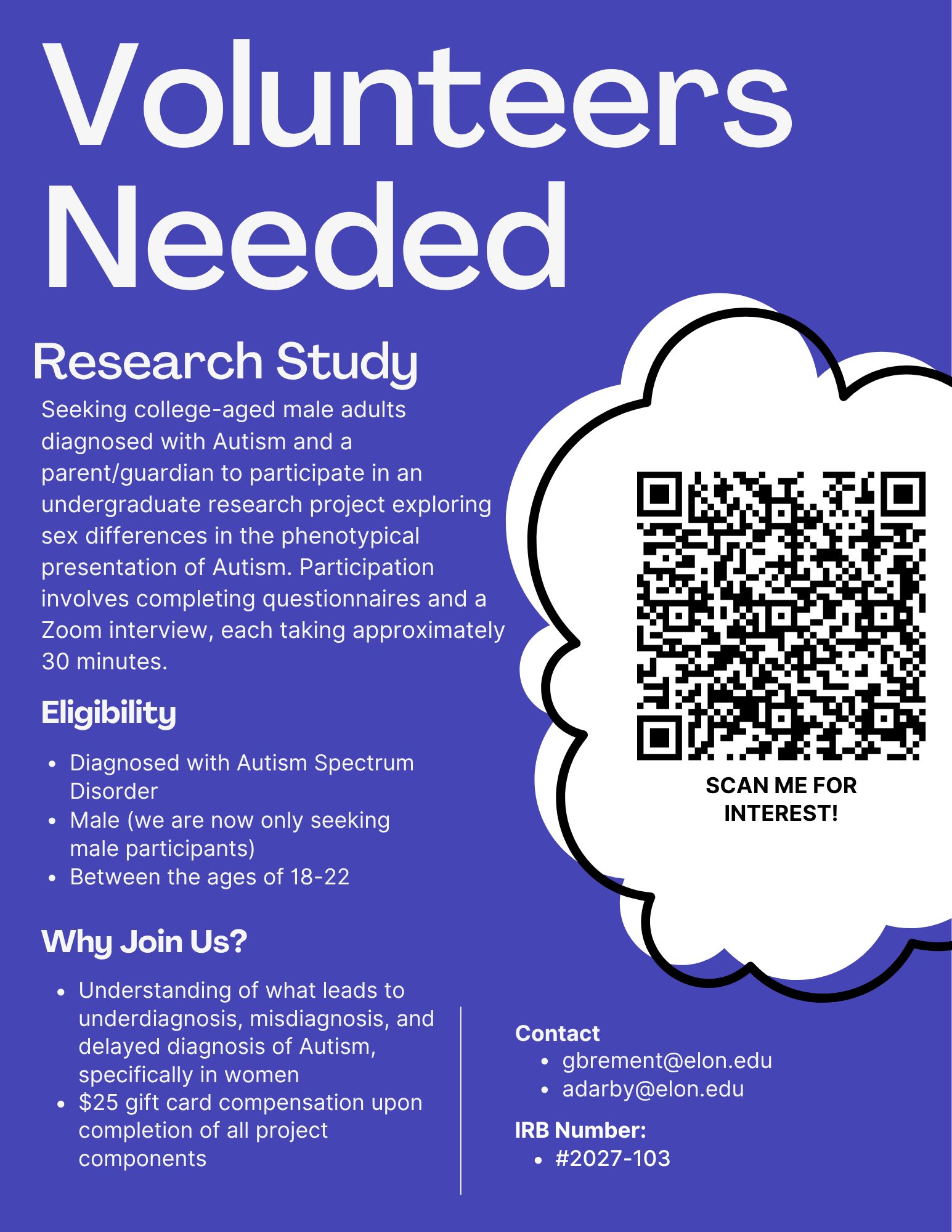
College-aged (18-22 years old) male-identifying individuals on the spectrum who were also assigned the sex male at birth. Individuals with autism will participate alongside a parent/guardian.
What will participants be doing?
1) Demographic questionnaire and consent form (10 minutes)
2) 62-item rating-scale survey (20-30 minutes)
3) Zoom interview (30-45 minutes)
Why is this important?
Most diagnostic instruments for autism were originally developed and normalized by focusing exclusively on male populations (Mandy et al., 2012: Bargiela et al., 2016). This male-centric development has led to lower sensitivity in identifying female presentations of autism, as features such as social camouflage and internalized symptoms often differ from traditional male-associated traits (Hull et al., 2020; Lai et al., 2015). As a result, many girls and women remain undiagnosed or receive delayed diagnoses, often being mischaracterized with other conditions such as anxiety or personality disorders instead (Baldwin & Costley, 2016; Cridland et al., 2014). This project will provide information to better close this gap by identifying traits that make up the Female Autism Phenotype