
Emotional Processing, Impulsivity, and Social Stress in Individuals with Broad Autism Phenotypes
What's the study about?
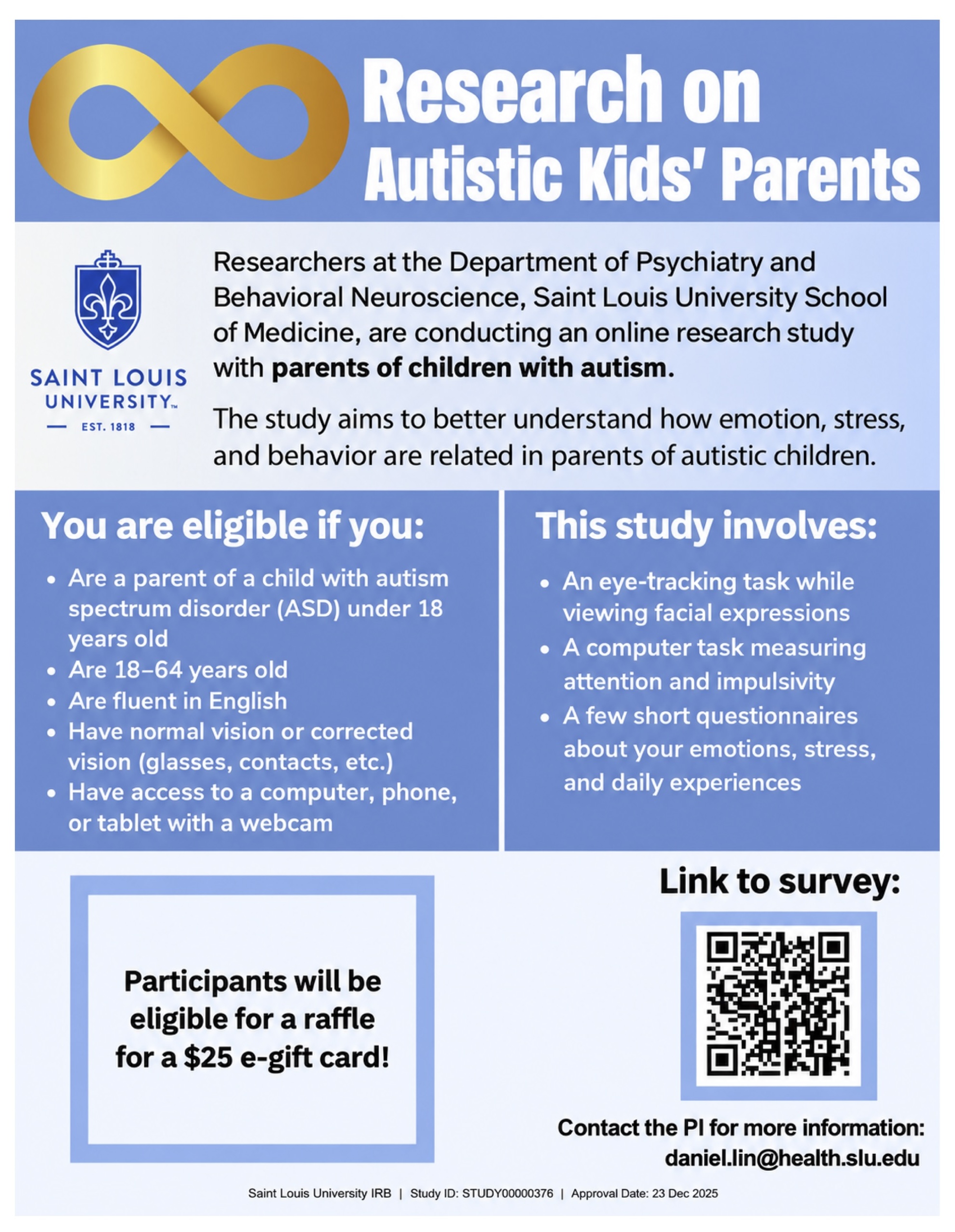
This study examines how traits associated with the broad autism phenotype (BAP)—subtle characteristics related to autism that can occur in people who have not been diagnosed with autism spectrum disorder (ASD)—are associated with emotional well-being, stress, and social interaction anxiety. Using eye-tracking technology during the Reading the Mind in the Eyes Test (RMET), we will examine how quickly participants direct their attention to the word that best describes the emotion shown in an image. We aim to understand whether social cue interpretation and emotional well-being vary according to BAP traits.
Who can participate?
Adults aged between 18 and 64 years who have not been diagnosed with autism may be eligible to participate. Participants must be able to understand the study instructions and complete the online or in-person assessments, as applicable.
What will participants be doing?
Participants will complete questionnaires about their personal characteristics, emotional experiences, stress, impulsivity, and social interactions. They will also complete the Reading the Mind in the Eyes Test while an eye-tracking device records their visual attention. This task involves viewing images of the eye region and identifying the word that best describes the emotion or mental state expressed. Eye-tracking will measure how quickly participants first look at the correct emotion label. The study is expected to take approximately 25 minutes. No biological specimens will be collected.
Why is this important?
People vary in how they interpret social cues and experience emotions, including those with different levels of broad autism phenotype (BAP) traits. Understanding these differences may help researchers better characterize the relationship between social cognition and emotional well-being without assuming that BAP traits necessarily indicate impairment. Additionally, the findings will provide a better understanding about psychological mechanisms underlying stress among carers of autistic children. In the future, this research could inform more individualized approaches to understanding social and emotional experiences and help support the diversity of needs for carers of autistic children.