
Baby Siblings Research is Critical to Understand ASD

By Alison Singer and Alycia Halladay

Spectrum News recently published “What Baby Siblings Can Teach Us About Autism,” an in-depth exploration of baby siblings research, and particularly initiatives made possible by the Baby Siblings Research Consortium (BSRC), which ASF  funds.  We are grateful that the writer, Ingfei Chen, and Spectrum have highlighted the impactful work that is being done in what we believe is an extremely significant and exciting area of autism science. However, there are some points of clarification about the article that we think are important to share.

The BSRC is a group of 26 principal investigators around the world who have spent nearly two decades investigating the very earliest signs and symptoms of autism by tracking behavior from early infancy.  Because infant siblings show a ~15x greater increase in ASD diagnosis compared to those without such a family connection, the younger sibs of children with autism provide an enriched pool, as 20% of them will likely be diagnosed with autism vs. 1-2% in the general population.  Such an approach is not unique to autism, but has been an especially productive avenue to understand ASD symptoms.

Baby siblings research has been a major source of information to families affected by ASD.  Even though 80% of the children studied will not go on to receive an ASD diagnoses, we have learned a tremendous amount from the 20% that did.  Because all siblings are closely tracked from infancy, clinicians are now more able to help the 80% without a diagnosis who still face considerable challenges.   And while it is true that baby sibling research has not yielded a definitive diagnostic test for children at 12 months of age,  these studies are hardly a failure.  Baby sibs research has identified or confirmed several early warning signs, including lack of response to name, abnormal eye gaze and motor delays.  Baby sibs research has helped identify new autism candidate genes that have yielded new targets for drug intervention.  And importantly (as the Spectrum story describes), new imaging work through a partnership between the BSRC and the IBIS network has identified two critical new brain based biomarkers that hold important future promise.   The Spectrum report mentioned only one of many such biologically based markers of early risk being explored.  For example, investigators are exploring other biomarkers that may be more practically implemented, like eye gaze and EEG.

Autism is heterogeneous and highly complex. It requires high risk, high reward type studies.  To put it in perspective, when the BSRC first started conducting studies, genetic researchers were searching for what they thought would be one or two autism genes.  They now know there are at least 60 autism genes.  Our family members with autism need us to think boldly and invest wisely. Instead of considering the early BSRC studies “misguided” because they failed to produce a diagnostic test, we should focus on the fact that these longitudinal studies have produced important advances in diagnosis, intervention, family support, and neurobiology and have spawned important lines of research across the ASD spectrum.  Most importantly, these early markers of an autism diagnosis have given families across the world an opportunity to receive the earliest possible intervention.  The benefits of these interventions have been well documented.

We consider the BSRC a success for families and look forward to new and important discoveries to come that will improve the lives of people with autism and their families.
By Alison Singer, President and Co-Founder of the Autism Science Foundation

For the past several years, parents of children with autism and adults with autism have described unusual pain responses in individuals with autism.  Because people with autism don’t communicate the same way as those without autism, they  may not be able to express their response to physical pain. Or, it may be possible that sensory issues may somehow change pain processing, or alter the ability to process a stimulus as painful or not painful.

Very little research has been done to address this critical issue affecting those with ASD and impacting their clinical care plans.  One reason why is that studying pain would require knowingly exposing people with and without autism to painful stimuli.

Beginning this summer, ASF will be funding a new study by Dr. Michelle Failla and Dr. Carissa Cascio at Vanderbilt University that we believe will enable us to begin to understand pain response in people with autism. This study will examine both verbal responses to pain, as well as nonverbal responses like heart rate, facial expression and stress response, to a mild stimuli in adults with ASD.

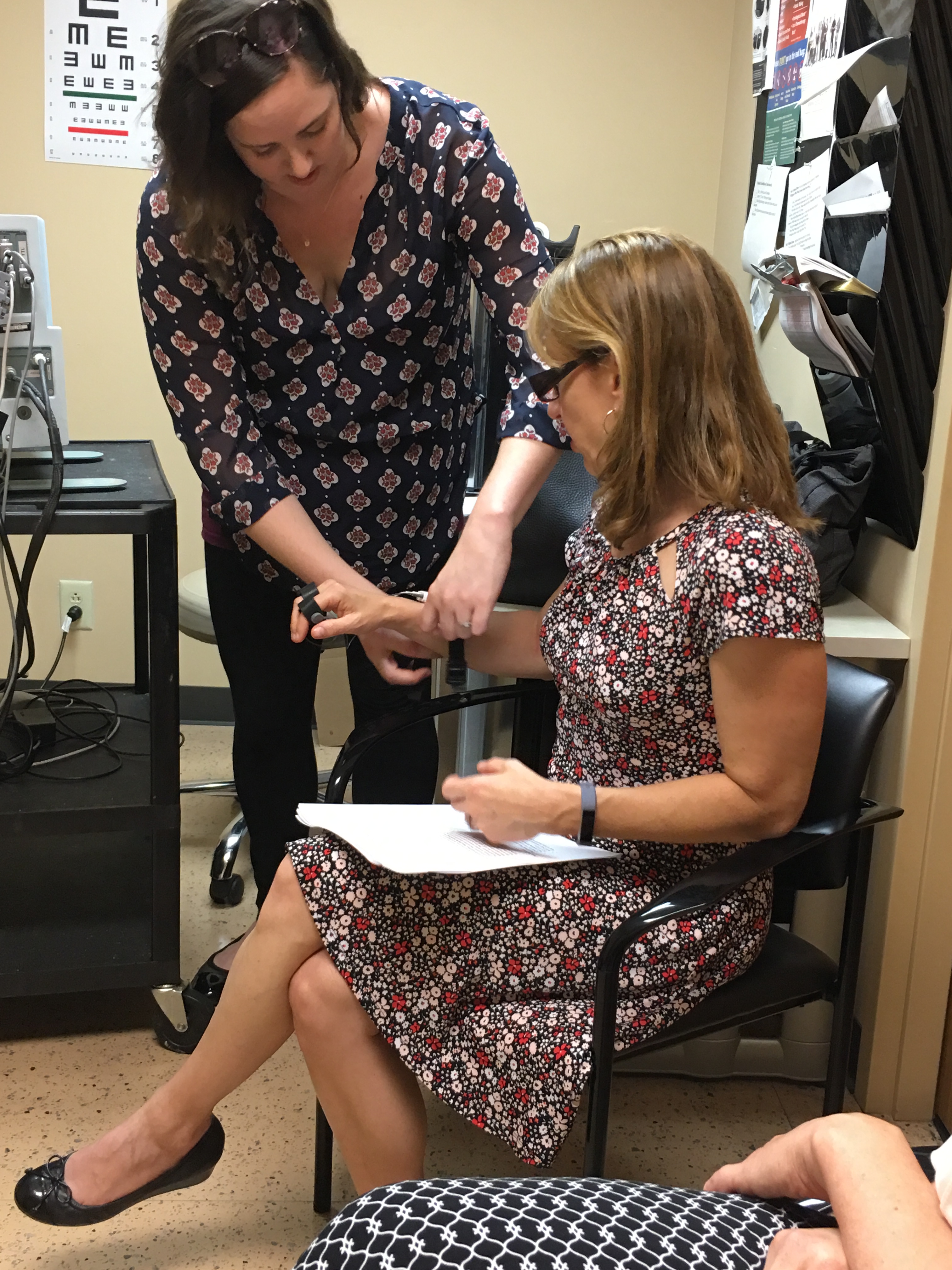
2017-07-06_14-58-18_539

Alison Singer is hooked up to the heart rate  and galvanic skin response monitors

The findings will help clinicians understand pain sensitivity so that new strategies to assess and manage pain can be developed.

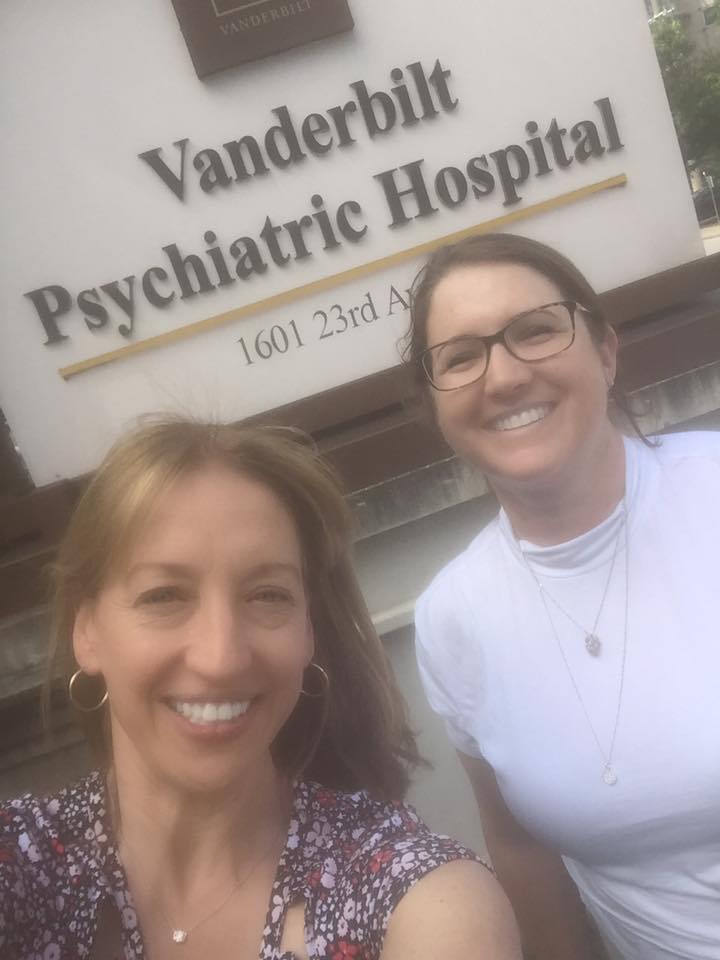
The study protocol was approved by the IRB of Vanderbilt University and exceeded all safety requirements. Nonetheless, before we felt comfortable recommending that adults with autism enroll in the study, ASF Chief Science Officer Dr. Alycia Halladay and I traveled to Nashville to experience the pain stimuli personally. We both felt strongly that we couldn’t ask individuals to subject themselves to pain unless we had experienced it ourselves and could offer a first-person account.

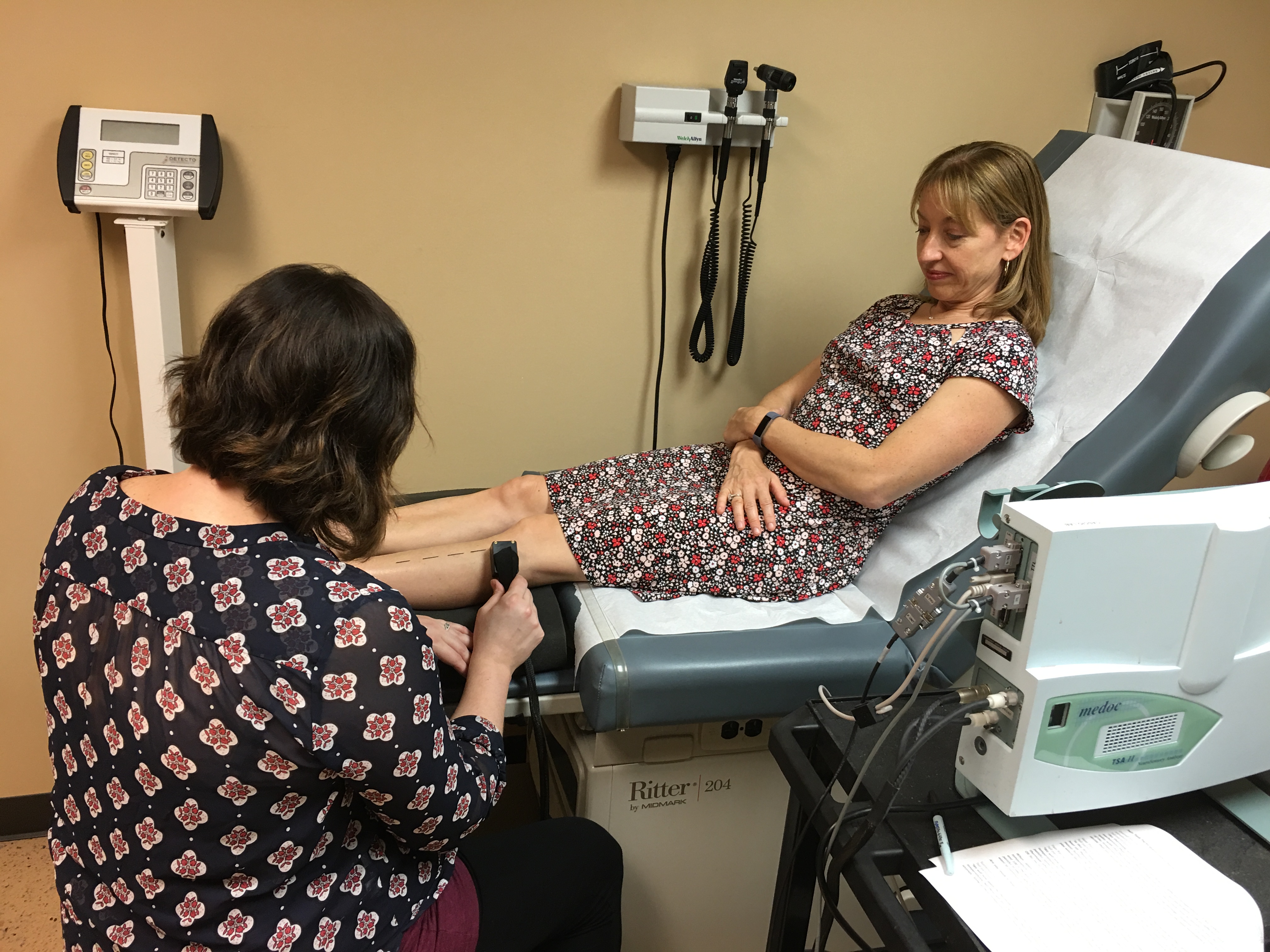
2017-07-06_15-50-59_517

A small hotpad is placed on the calf by Michelle Failla.

Three short “tasks” were involved in the study.  Each measured our pain sensitivity to heat delivered by a small thermode (a hot plate, approximately 1 inch by 1 and ½ inches) placed on our calf. During the tasks, we felt heat for a short period and then were asked to rate the amount of pain we felt on a scale of 0 to 100 (0 indicating no pain and 100 indicating the worst pain).     The highest amount of pain we felt in any task was 60-70 but most were lower and several were 0.  In the third task, the small hot plate was administered for bursts of 15 seconds and again we were asked to rate the amount of pain we felt on a scale of 0-100. Here our highest rating was a 20.  Throughout the procedure we were repeatedly reminded that we could stop at any time by saying “stop”. During the trials, investigators also monitored pulse rate, galvanic skin response and facial expressions as nonverbal measures.

The first phase of this work will focus on adults with autism. Participants are required to have an IQ above 80 and to personally consent to participation. In addition, participants must successfully complete a quiz to show that they fully understand the consent process and their rights as participants, including the right to change their mind and withdraw consent at any time.  In addition, two adults with autism will serve as consultants to the scientists conducting the study; one is a member of the faculty at the Vanderbilt School of Music and the other is a Vanderbilt MD-PhD student.

19665364_10154961547371645_3425667367782020843_n

Alison Singer and Alycia Halladay unscathed after experiencing the study.

Based on our first-hand experience, we both feel very comfortable encouraging adults with and without autism to participate in this important study, as long as they are capable of consenting.  Participants will feel some pain, but it is short and not difficult to experience. In fact, I experienced more heat-based pain on the plane ride home when my laptop overheated on my legs. All of the members of this research team are actively engaged and very focused on making sure participants do not experience any more discomfort than is necessary.  If the pain response were not altered in people with autism, then this sort of research would not be necessary.  In order to make sure that individuals with autism are not unnecessarily feeling pain that could otherwise be treated, this type of project is needed.

For more information about this study, visit the Cascio Lab website.

Today, Robert F. Kennedy, Jr. – who has continued to publicly promote the discredited theory that vaccines cause autism — met with President-Elect Donald Trump in New York City and afterward stated that Mr. Trump has asked him to lead a new commission on vaccine safety and scientific integrity. Autism Science Foundation President Alison Singer released the following statement in reaction to Mr. Kennedy’s comments:

STATEMENT FROM ALISON SINGER, PRESIDENT, AUTISM SCIENCE FOUNDATION:

“The scientific research has been done and the results are clear – vaccines do not cause autism. Some people may choose not to believe the facts, but perpetuating a myth from the very highest levels poses a dangerous threat to public health. Creating a commission makes it look like scientists have not already studied this issue for many years, and it may lead people to think this is still an open question. It is not.

It’s imperative that parents make health decisions for their children based on scientific evidence, in consultation with their pediatrician. I fear that parents will think we don’t have the data that we do – from dozens of studies — and will withhold lifesaving vaccines from their children. Withholding vaccines will do nothing to reduce the chance that a child is diagnosed with autism, but will absolutely increase the chance that a child could contract and die from a vaccine-preventable disease. Vaccines save lives, period.”

# # #