
Assessing Trust and Mistrust in AI Systems Among Parents and Caregivers of Autistic Individuals
What's the study about?
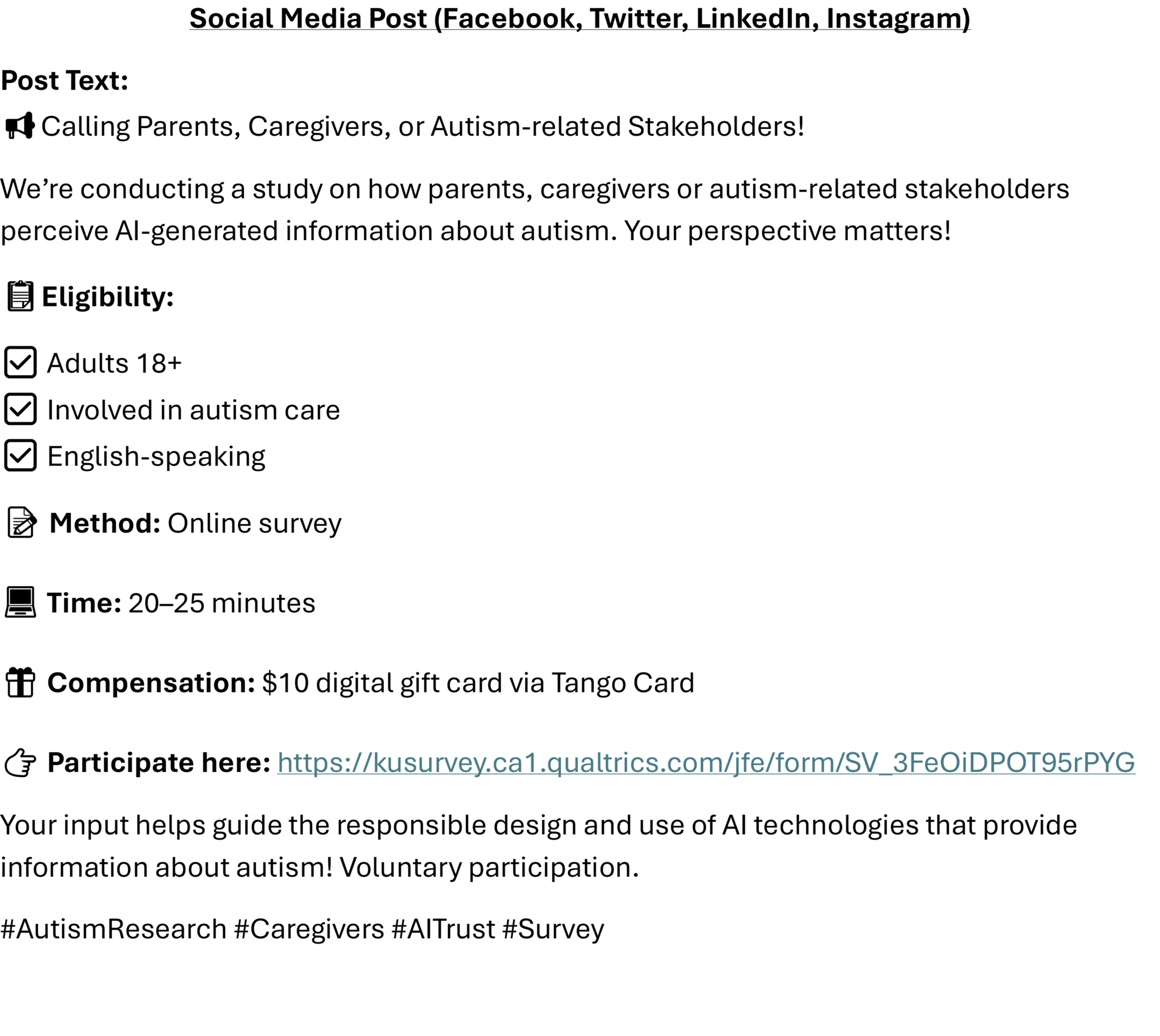
The increasing use of Artificial Intelligence (AI) systems in healthcare, education, and caregiving contexts raises critical questions about trust, reliability, and vulnerability—particularly among parents and caregivers of autistic individuals. This study investigates how parents, caregivers, and autism-related stakeholders perceive and trust AI-generated information. A survey-based methodology is employed in which participants evaluate AI-generated responses to autism-related questions, including both accurate information and intentionally embedded misinformation. Participants assess trustworthiness, reliability, and perceived usefulness of AI outputs, as well as their ability to identify misinformation. The study aims to develop and validate AI trust constructs related to informational trust, misinformation detection, and perceived system reliability. Demographic variables, including caregiver role, education level, and prior AI exposure, are analyzed to examine differences in trust patterns. Findings are expected to contribute to responsible AI design, ethical deployment, and improved AI literacy in autism-related domains, with implications for both specialized and general populations.
Who can participate?
• Parents of autistic children
• Caregivers, educators, or therapists working with autistic individuals
What will participants be doing?
The participants will be completing an online survey that examines trust in AI systems among parents, caregivers, and individuals associated with autistic populations.
Why is this important?
AI systems are increasingly used as sources of information and decision support in sensitive domains such as autism diagnosis, therapy guidance, education planning, and parental decision-making. Parents and caregivers of autistic individuals often seek accessible, immediate, and understandable information, making them potential high-frequency users of AI systems. However, AI-generated responses may contain inaccuracies, outdated information, or subtle misinformation that is difficult to detect. Excessive trust in AI systems can lead to harmful decision-making, while excessive distrust may prevent beneficial use. Currently, limited empirical research exists on how parents and caregivers of autistic individuals perceive AI trustworthiness, how they evaluate AI reliability, and whether they can identify misinformation in AI-generated responses. This gap limits the development of ethical, transparent, and trustworthy AI systems tailored to vulnerable populations.