
Assessing Trust and Mistrust in AI Systems Among Parents, Caregivers and Stakeholders of Autistic Individuals
What's the study about?
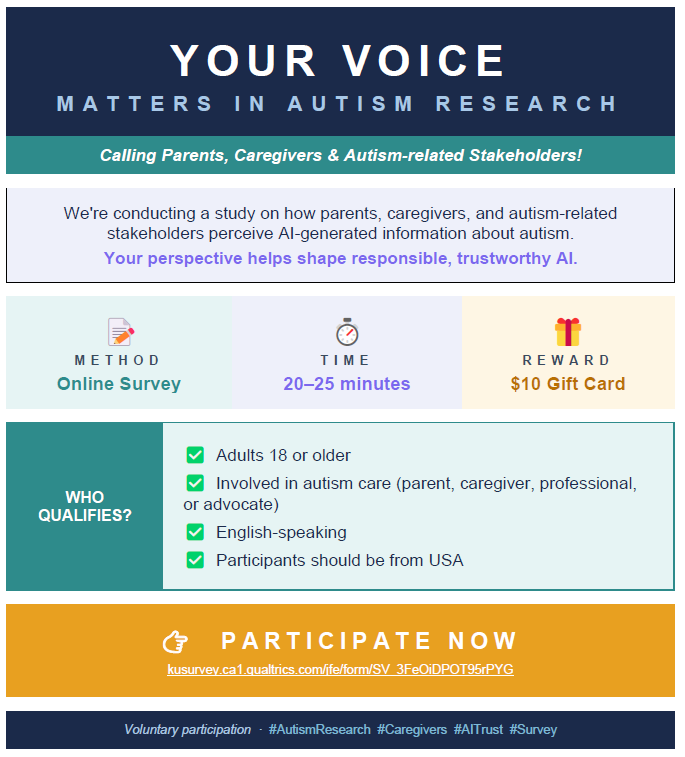
The increasing use of Artificial Intelligence (AI) in healthcare and caregiving raises critical questions about trust and reliability, particularly among parents, caregivers and stakeholders of autistic individuals. This study investigates how autism-related stakeholders perceive and trust AI-generated information using a survey-based methodology. Participants evaluate AI-generated responses to autism-related questions—containing both accurate information and intentionally embedded misinformation—to assess trustworthiness, reliability, perceived usefulness, and misinformation detection. Ultimately, the study aims to examine trust/mistrust formation, develop validated AI trust constructs, and analyze how demographic variables (such as prior AI exposure) influence trust patterns. The findings will contribute to responsible AI design, ethical deployment, and improved AI literacy in both specialized and general populations.
Who can participate?
• Parents of autistic children
• Caregivers of autistic individuals
• Stakeholders of autistic individuals
What will participants be doing?
Participants will complete a online survey lasting approximately 20 to 25 minutes.
Why is this important?
As AI tools increasingly become a primary source of information for healthcare, education, and daily caregiving, families in the autism community are interacting with systems that are not yet fully vetted for accuracy. This study is crucial because it examines the fragile balance of trust: over-trusting AI can lead to the adoption of harmful medical or behavioral misinformation, while a complete lack of trust may prevent families from utilizing genuinely helpful, accessible resources. By measuring how caregivers evaluate AI-generated outputs and identifying what makes misinformation persuasive, this research provides the empirical data needed to understand digital vulnerability in specialized health domains.
Future Benefits to the Autism Community
1. Safer AI Tool Development: The findings will directly inform developers and engineers on how to design “responsible AI” frameworks that minimize dangerous hallucinations (made-up information) in autism-related contexts.
2. Targeted AI Literacy Programs: By analyzing which demographics or experience levels are most susceptible to AI misinformation, organizations can create tailored educational resources to help caregivers critically evaluate digital advice.
3. Ethical Deployment Standards: This study establishes validated AI trust constructs that clinicians, advocates, and policy-makers can use to set safety standards for AI tools before they are introduced into clinical or educational settings.