
Examining the Impact of Politicized Conversations on the Autism Community
What's the study about?
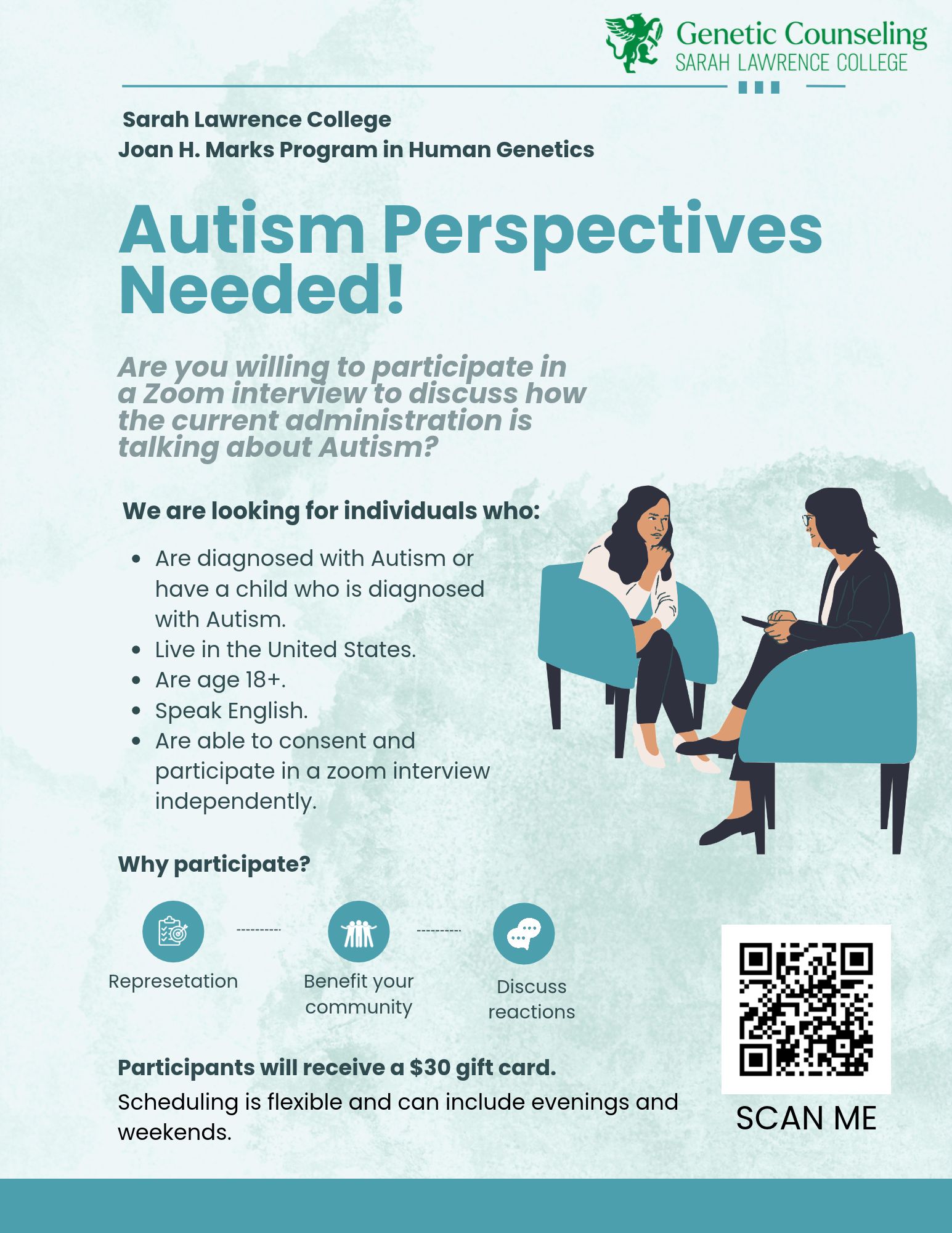
Over the past two decades the prevalence of autism has increased four folds rising from 1 in 150 to 1 in 36 children. This has given rise to varied responses and experiences across individuals, families and communities, health care systems. This past year, RFK Jr. referred to autism as a tragedy and claimed that it is destroying families which led to his promise to, “take bold actions to tackle the autism epidemic.” In response, members of the autism community and their advocates have voiced their perspectives on these claims. As we immersed ourselves in these increasingly polarizing discussions, we realized that the most important stakeholders were often absent from these conversations. We identified a gap in understanding how the administration’s language and actions have affected the autism community itself. The goal of this study is therefore to center the perspectives of autistic individuals and their families in the ongoing national conversation about autism.
Who can participate?
(For autistic individuals)
You are being asked to participate because you:
– are autistic
– are able to consent without the help of a guardian
– are able to participate in the interview independently
– are age 18 or older
– speak English
– live in the United States
(For parents of autistic individuals)
You are being asked to participate because you:
– have an autistic child
– are able to independently consent
– are age 18 or older
– speak English
– live in the United States
What will participants be doing?
You will be asked to participate in a 45-minute Zoom interview with one of the two students running the project. The audio of the interviews will be recorded. This recording is required for participation in this study. Interview questions will be shared in advance. An example of what we will discuss is your reactions and emotions relating to various assertions made by the administration regarding autism such as claim made by RFK Jr. and President Donald Trump that Tylenol use during pregnancy is linked to Autism.
Why is this important?
The data may be useful in addressing any potential resulting misinformation, emotional harms, or stigma experienced by autistic individuals and families. Understanding these perspectives will also inform the implementation of patient centered care for patients from the autistic community. It can also help guide advocacy efforts and research initiatives in prioritizing the needs of autistic individuals and families. We also hope to collect information that will be valuable to genetic counselors who work with autistic individuals and their families. Ultimately, we hope that this project contributes to a more inclusive research environment where these voices become integral and embedded in the work.