
Family Engagement in Emotional Learning
What's the study about?
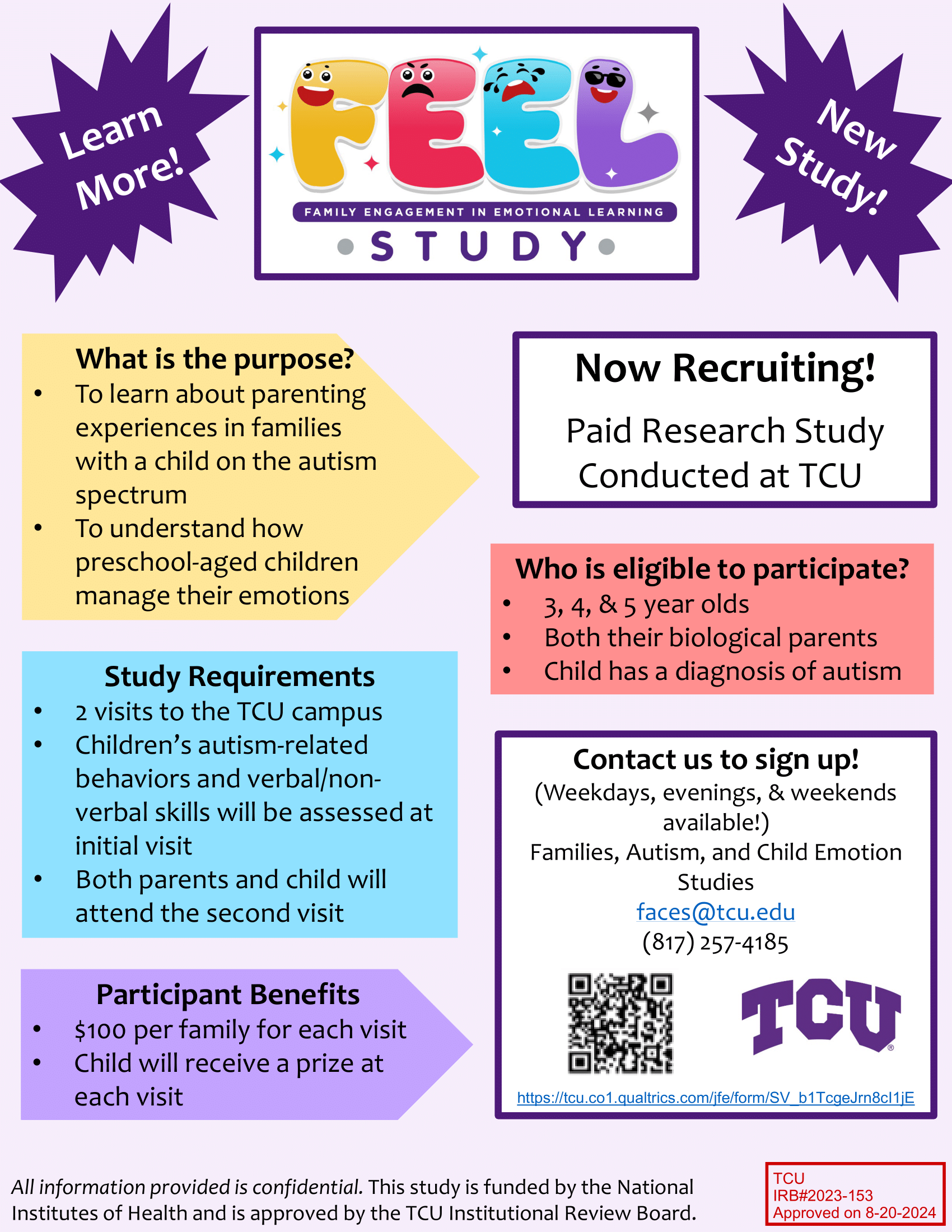
The purpose of this study is to better understand how autistic preschoolers regulate their emotions during different situations. Parents play a critical role in shaping early emotional development and we are also interested in how parents influence their children’s emotion regulation.
Who can participate?
Children between the ages of 3-5 years who have a diagnosis of autism. Their biological parents are also required to participate in study visits.
What will participants be doing?
There will be two study visits. At the first visit, the child and their primary caregiver will come to campus and complete and autism assessment and a cognitive functioning assessment (both with their parent in the room). Their parent will complete some surveys. Then mothers and fathers will be emailed surveys to complete before the next study visit. At the second study visit, the child, mother, and father come to campus. Parents and children will complete some play tasks (with and without toys) and then we will connect children to sensors to measure their heart rate. Then the child will participate in some tasks designed to elicit mild emotions with their mother or father present.
Why is this important?
This study is important because the ability to regulate emotions is critical for children’s social and emotional development and difficulties regulating emotions can lead to mental health challenges later in life. By understanding early emotional development in autistic children we can develop better interventions.