
How Babies Learn to Communicate Through Everyday Interaction
What's the study about?
This study looks at how babies learn to make speech-like sounds through everyday interactions with their caregivers. When babies babble, caregivers often respond by smiling, talking, or showing excitement. Research suggests that these back-and-forth interactions help babies practice and develop new vocal skills. In this study, we observe babies while they interact naturally with their caregiver to better understand how these early learning processes work. We are especially curious about whether this process works the same way for babies who have an older sibling with autism (and may be more likely to develop autism) and babies who do not.
Who can participate?
Babies (10-12 months old) with an older sibling (the old sibling can either be neurotypical or diagnosed with Autism)
What will participants be doing?
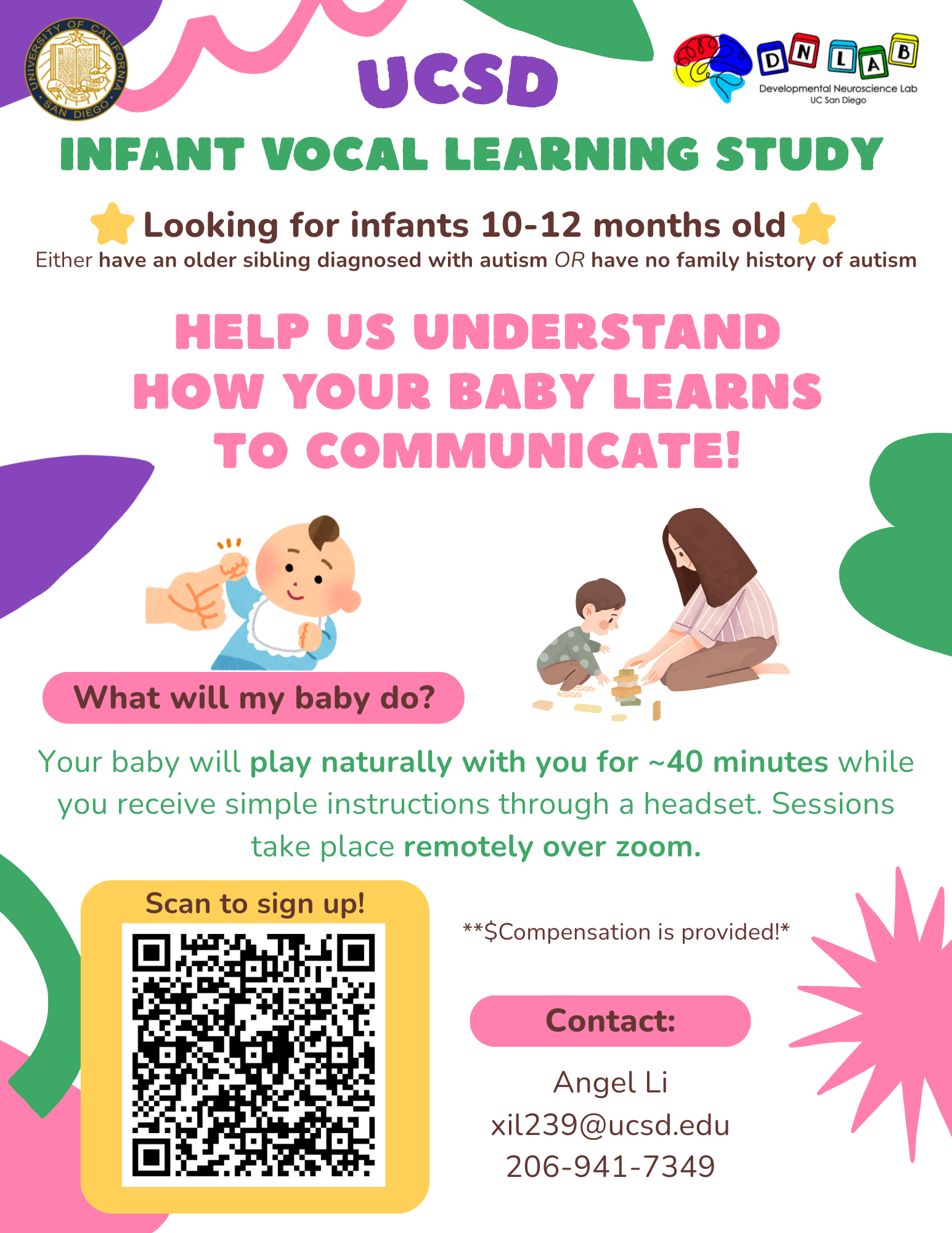
Participants will take part in a single online session lasting about 40 minutes. During the session, a caregiver and their baby (10–12 months old) will interact and play together while the research team observes over Zoom. The caregiver will be asked to interact with their baby in a few slightly different ways during the session while the baby plays and vocalizes. The baby will wear a small microphone clipped to their clothing so we can clearly record their sounds. The session will be video and audio recorded so that the research team can later analyze the baby’s vocalizations. Families can pause or stop the session at any time if needed.
Why is this important?
Early communication skills begin to develop in the first year of life, and babies learn many of these skills through everyday interactions with caregivers. Babies who have an older sibling with autism are more likely to develop autism, but we still know little about how early learning processes work for these infants. By studying how babies learn new vocal sounds through social interaction, this research may help scientists better understand early communication development and inform future approaches to supporting young children’s language development.