
I see me, I see you: Recognizing emotions in others
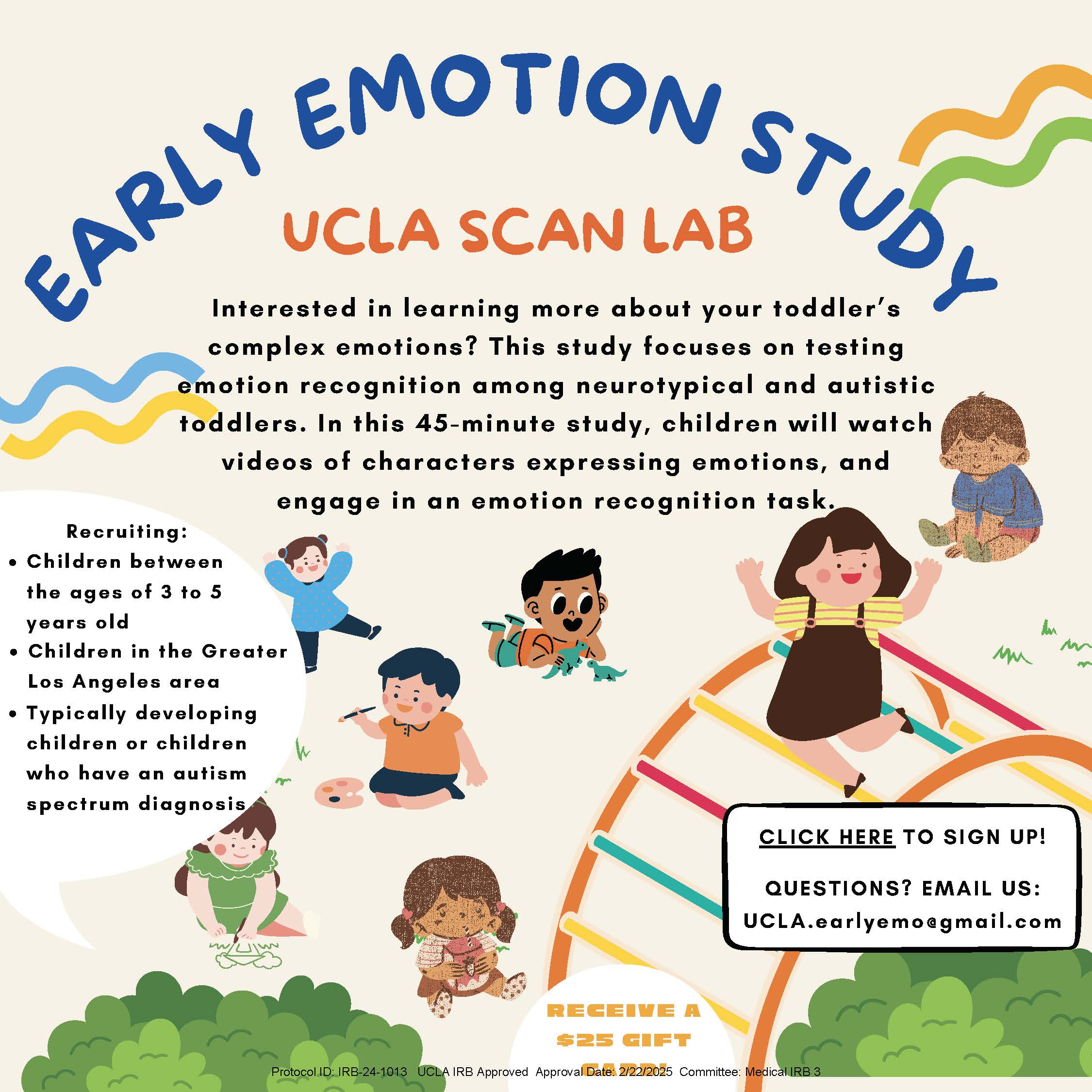
What's the study about?
Our study explores when and how preschoolers with autism recognize different kinds of emotions from other peoples’ facial expressions! This study includes some real-world contexts, like distracting background sounds, to reflect how children recognize emotions in the real world! Our study will also explore how children’s emotion learning may change after viewing one’s own emotion expressions. For example, does a child seeing themself laugh help them recognize happy faces? Some studies have shown that older children and adults are better at identifying emotion expressions after watching themselves express similar emotions. This part of our study will help identify key tools for young children with emotion processing challenges.
Who can participate?
Participants joining the study online can join from ANYWHERE in the US!
Both parents/caregivers and their children will participate. Eligibility criteria includes:
– Children must be between the ages of 3 to 5 years.
– Children must be cognitively capable of playing a matching game about feelings in other people.
– Family must have access to a laptop or desktop to join the Zoom session, fill out questionnaires remotely, and complete consents remotely.
We are only recruiting children with ASD at this time.
What will participants be doing?
Half of this study takes place on a scheduled video call with a researcher! The other half of this study consists of surveys that will take about 20 to 45 minutes. Clicking on the the link under “Where” will send you to an online form where you can confirm your eligibility and schedule a date and time that works for you! We will send you a link to a survey that has questions about you, your child, and their sensory experiences, developmental milestones, and other behaviors. During the 45-minute study session, your child will look at pictures of other children and answer some questions about these children’s feelings. Your child will also watch video clips, from television shows and movies, like Moana, and later watch their reactions to these videos (e.g., child laughing or frowning).
Why is this important?
This study will help researchers understand when and how young children with and without autism develop the ability to recognize complex emotions from others’ facial expressions. Findings from this study may inform potential interventions for young children facing emotion processing challenges.