
Incorporating Brain Science to Support Parenting Neurodivergent Children
What's the study about?
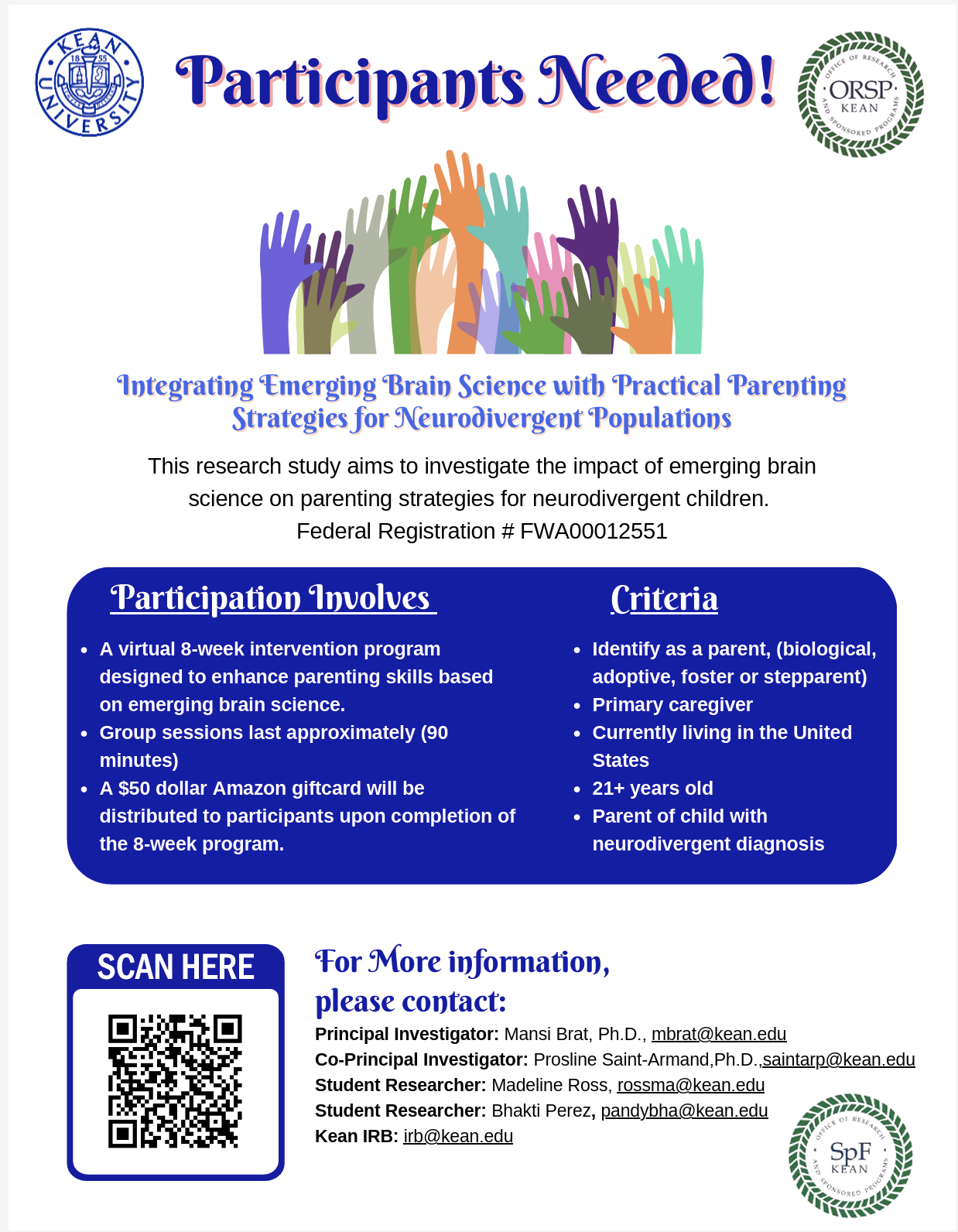
This proposed study examines how emerging brain science—particularly within the framework of Interpersonal Neurobiology (IPNB)—can be translated into practical parenting strategies for caregivers of neurodivergent children. Grounded in research showing elevated stress, anxiety, and reduced self-efficacy among these caregivers, the study adopts a strength-based and critical disability perspective to reframe neurodivergence as a form of human diversity rather than deficit. It focuses on key domains such as neuroplasticity, emotional regulation, social cognition, and executive functioning, and explores how strategies like co-regulation, structured routines, visual supports, and play-based interactions can support children’s development. Methodologically, the study will recruit caregivers to participate in an 8-week parenting intervention, using pre- and post-program semi-structured interviews analyzed through Interpretative Phenomenological Analysis (IPA) to capture lived experiences and changes in parenting practices. The anticipated outcome is to bridge the gap between neuroscience and real-world application by producing accessible, evidence-based parenting tools that enhance family resilience, promote child development, and support more inclusive, strengths-focused care for neurodivergent populations
Who can participate?
Participants in the study are parents or primary caregivers of neurodivergent children (e.g., children with autism, ADHD, dyslexia, or related profiles). To be eligible, individuals must be willing to engage in an 8-week structured parenting program and participate in both pre- and post-intervention interviews about their parenting experiences, strategies, and challenges. The study plans to recruit a small, diverse sample (approximately 8 participants) from community sources such as local schools, university-affiliated programs, and support networks, with inclusion criteria ensuring that participants have relevant lived experience and commitment to completing the program.
What will participants be doing?
Participants will take part in an 8-week structured parenting program focused on applying neuroscience-informed strategies to support their neurodivergent children. At the start of the study, they will complete a semi-structured interview to discuss their current parenting practices, challenges, and understanding of their child’s development. Throughout the program, participants will attend weekly sessions that introduce concepts such as neuroplasticity, emotional co-regulation, executive functioning, and social cognition, while also practicing and implementing these strategies in their daily interactions with their child. Following the completion of the program, participants will engage in a post-intervention interview to reflect on any changes in their parenting approaches, their child’s behavioral and emotional responses, and their overall experience in the study.
Why is this important?
This study is important because caregivers of neurodivergent children often experience elevated levels of stress, anxiety, and reduced parenting self-efficacy, which can negatively impact both parent well-being and the parent–child relationship. By translating complex brain science into practical, accessible parenting strategies, the study aims to empower caregivers with tools that improve emotional regulation, communication, and daily functioning in their children. Additionally, it promotes a shift from deficit-based views of neurodivergence to a strength-based, inclusive framework that recognizes neurodivergent individuals as having unique abilities rather than impairments. Ultimately, this research seeks to bridge the gap between neuroscience and real-world application, enhancing family resilience, improving developmental outcomes for children, and contributing to more equitable and effective support systems for neurodivergent populations.