
Masking, Authenticity, Loneliness, and Wellbeing Across Neurotypes
What's the study about?
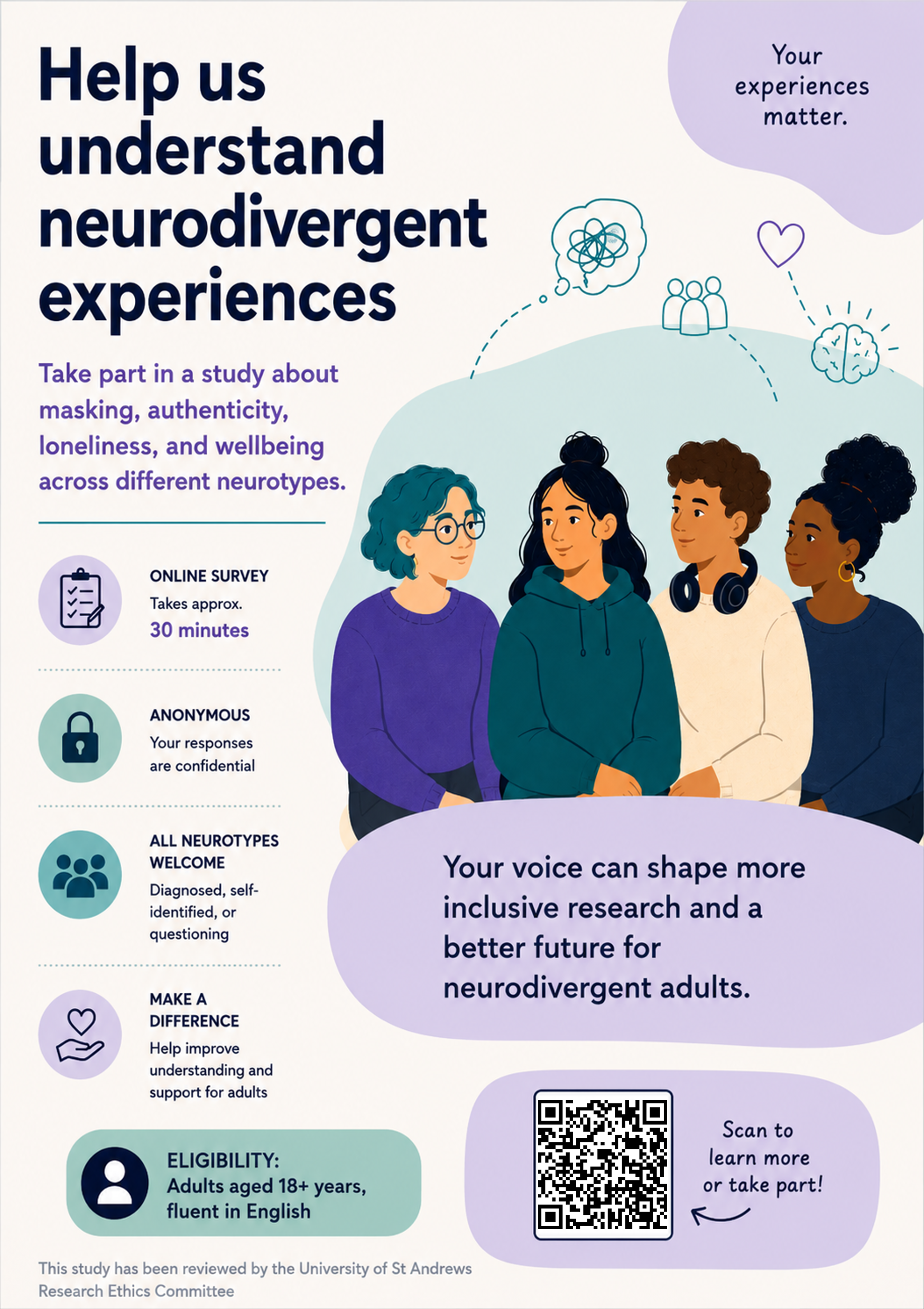
This anonymous online study explores how masking/camouflaging, authenticity, loneliness, and wellbeing relate to one another across different neurotypes and lived experiences. It focuses particularly on autistic, ADHD, and AuDHD adults, while also including otherwise neurodivergent, questioning, and non-neurodivergent adults. The study asks about experiences such as camouflaging neurodivergent traits, managing social expectations, feeling able to be yourself, being misunderstood, and access to socially compatible relationships.
Who can participate?
Adults aged 18 years or older who are fluent in English can participate. Participation is open worldwide. A formal diagnosis is not required: autistic, ADHD, AuDHD, otherwise neurodivergent, questioning, and non-neurodivergent adults are all welcome to take part.
What will participants be doing?
Participants will complete an anonymous online questionnaire. The survey includes questions about social experiences, masking/camouflaging, authenticity, loneliness, wellbeing, mental health, and autistic and ADHD traits. Participants will answer multiple-choice and rating-scale questions, with optional open-text questions where they can share anything the questionnaire did not fully capture. The survey takes around 20–30 minutes to complete.
Why is this important?
This study is important because loneliness and wellbeing are often studied as individual outcomes, but less attention is given to the everyday social experiences that may contribute to them. For autistic people, these experiences can include masking/camouflaging, managing unclear social expectations, being misunderstood, feeling unable to be yourself, and having limited access to socially compatible relationships.
By exploring these experiences across autistic, ADHD, AuDHD, otherwise neurodivergent, questioning, and non-neurodivergent adults, the study may help identify social factors that are associated with loneliness and wellbeing. In the future, this could contribute to more neurodiversity-informed research and help improve understanding of the kinds of social environments, relationships, and supports that allow autistic and neurodivergent people to feel understood, accepted, and able to be themselves.