
Patience in Parenting
What's the study about?
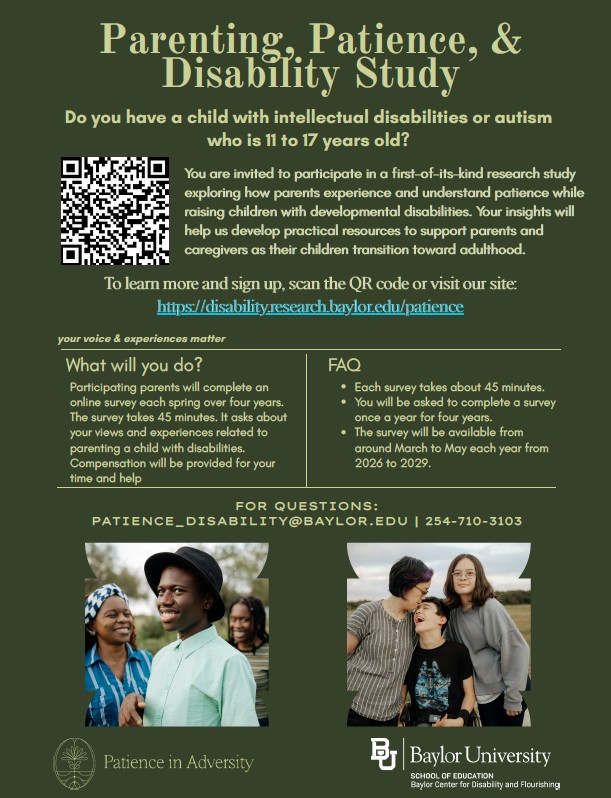
This study is about understanding the experiences of parents and caregivers raising adolescents with intellectual and developmental disabilities (IDDs), including autism, during the transition from adolescence to adulthood. Researchers are interested in learning more about patience, stress, support, well-being, and parent-child relationships over time, as families navigate educational, healthcare, community, and future planning systems. Findings from this study may help researchers and professionals better understand the factors that support caregiver well-being and healthy family relationships and may inform future supports and resources for families of adolescents with autism and other IDDs.
Who can participate?
Parents of children/adolescents ages 11-17 who have intellectual or developmental disabilities (IDD), including autism; participants must live in the United States and have English fluency.
What will participants be doing?
Participants will be asked to complete an online survey about their experiences raising an adolescent with autism. The survey will include questions about patience, stress, well-being, support systems, parent-child relationships, and experiences navigating services and supports during adolescence and the transition to adulthood. The online survey will take approximately 45 minutes to complete and will be completed once per year for four years. A smaller group of participants may also be invited to complete brief daily surveys over a 7-day period to better understand day-to-day experiences related to parenting, stress, and patience. Additionally, some participants may be invited to participate in a semi-structured interview to discuss their experiences in greater depth. No medical procedures or biological specimen collection are involved in this study.
Why is this important?
This study is important because families raising adolescents with intellectual and developmental disabilities, including autism, often experience significant stress while navigating educational, healthcare, behavioral, and community support systems during the transition to adulthood. Although caregiver stress has been widely studied, less is known about the factors that help families adapt, maintain well-being, and sustain healthy family relationships over time. By examining patience, support, stress, and caregiver well-being longitudinally, this study may help identify protective factors that support families of autistic youth during adolescence and emerging adulthood. Findings could inform future resources, supports, and interventions designed to strengthen caregiver well-being, improve family quality of life, and promote positive long-term outcomes for autistic individuals and their families.