
Research of the brain-body-environment synchronization in autistic adults
What's the study about?
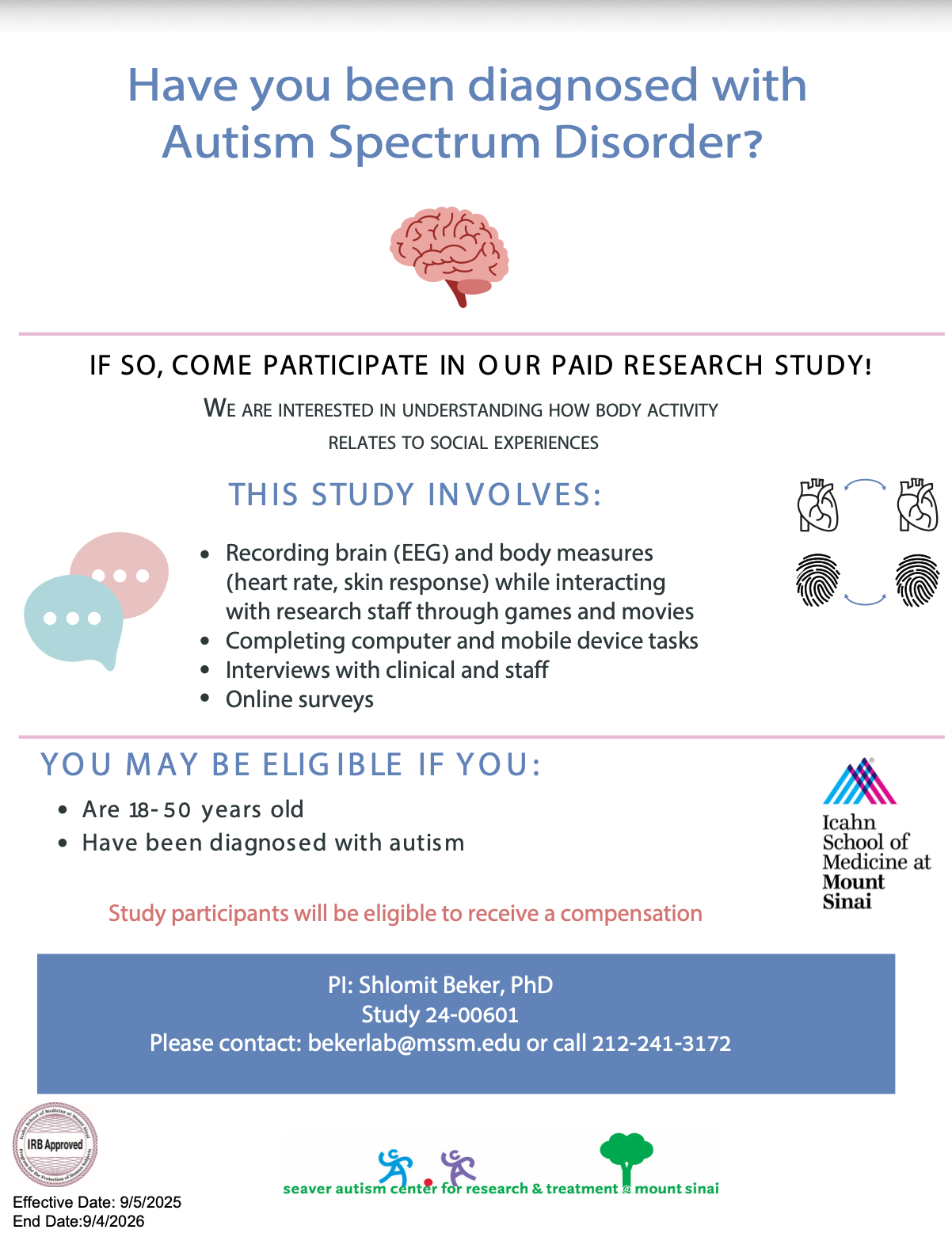
This study aims to investigate how physiological body activity relates to natural social experiences between two people. We aim to test the integrity of brain-body-environment synchronization in ASD. For this, we will use a sensory detection task, motor tapping task and social tasks, while EEG (CNS) ECG (ANS) activity and eye tracking are recorded.
Who can participate?
– Have a formal diagnosis of autism
– Aged 18-50 years old.
– Not on medications that alter heart rate (e.g. beta blockers)
– No medical history of heart conditions
What will participants be doing?
Participation includes a brief phone screening (~15 minutes) and confirmation of diagnosis to determine eligibility. Eligible participants will then complete two in-person sessions at The Seaver Autism Center (4 hours total).
In the first session, participants will be completing clinical measures and surveys (2 hours).
In the second visit, physiological measures such as heart rate and skin conductance will be recorded while participants interact with another participant. Activities include having a conversation, playing a game, and watching a short movie together. The second visit will conclude with a short EEG session (2 hours).
Why is this important?
If the data supports our thesis, this will pave the way for establishing tractable, stable biomarkers of ASD and the development of novel behavioral treatment approaches.