
Resilience and Positive Mental Health in Autistic Teens
What's the study about?
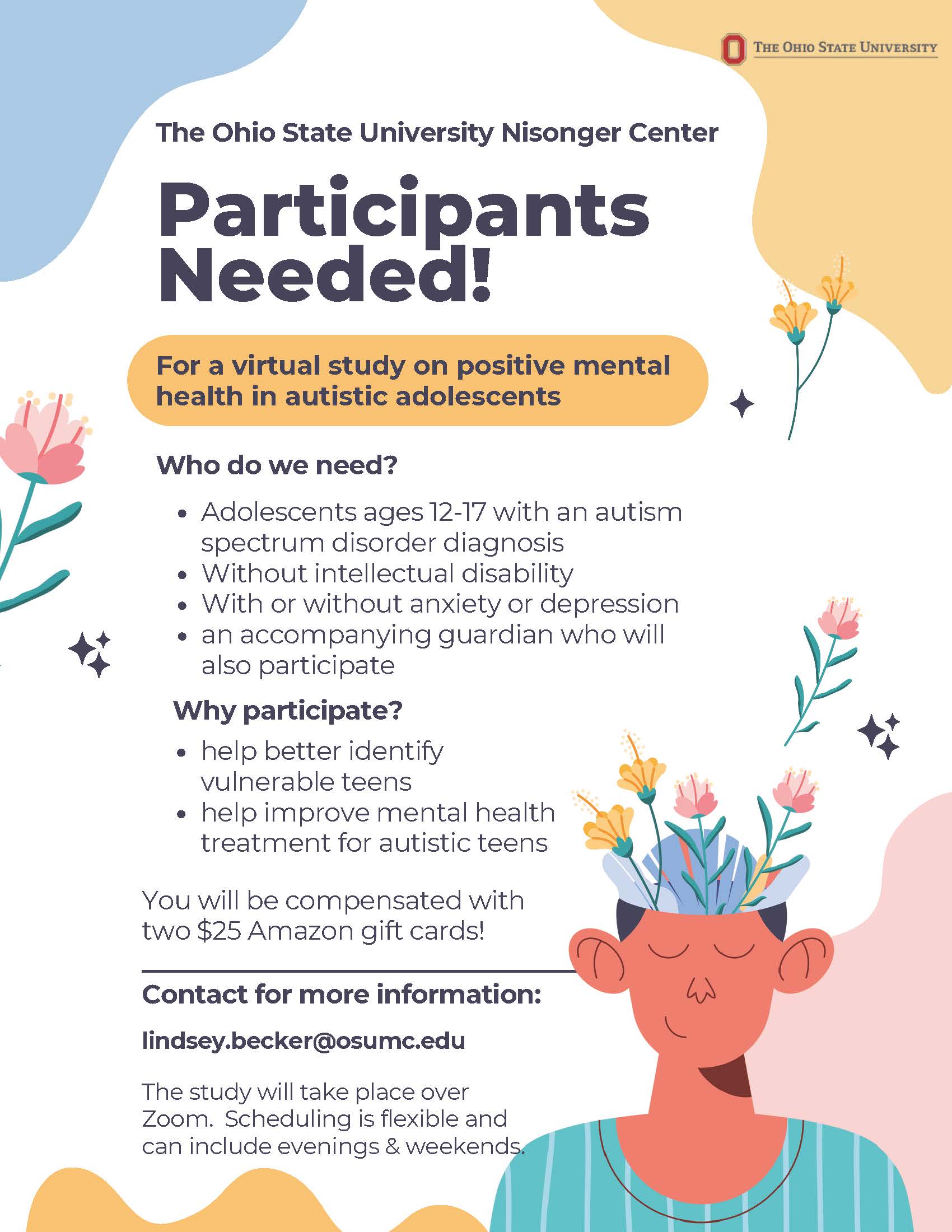
Resilience is being able to “bounce back” after stress, and can protect people from mental health problems such as anxiety and depression. There are lots of things that might contribute to how resilient someone is. This study aims to identify what positive mental health factors, such as optimism, support from other people, autistic identity, and self-esteem, might help promote resilience in autistic teens.
Who can participate?
We are looking for autistic teens and a parent/guardian who would also participate. You and your teen may be eligible to participate if:
1. Your teen is between the ages of 12 and 17
2. Your teen has been diagnosed with ASD
3. Your teen does not have an intellectual disability
Your teen does not need to have anxiety or depression to participate. We are looking for both teens who are currently experiencing mental health problems and those who are not.
Prior to participating, a parent would complete a brief screening phone call with the research team to confirm eligibility.
What will participants be doing?
The Zoom session should take about an hour in total.
The parent would complete 3 rating forms on demographics, emotion regulation and adaptive behavior.
The teen would complete a brief IQ assessment, which should take about 15 minutes. Then the teen would answer questions on positive mental health factors (optimism, self-efficacy, sense of mastery, feeling supported by others, and feeling valued by others), autistic identity, anxiety and depression.
After completing the study, both the parent and child would receive a $25 Amazon gift card. A brief report including updated cognitive, adaptive behavior, anxiety, and depression scores can be given upon request.
Why is this important?
Autistic teens may experience more stress and adverse events, such as trauma and bullying, than neurotypical teens. However, there are very few studies of resilience in autistic teens. We do not know what the important components of resilience are in autistic teens. Understanding this can help identify autistic teens who may be vulnerable to mental health problems. It can also help us improve therapy and increase resilience for autistic teens in the future.