
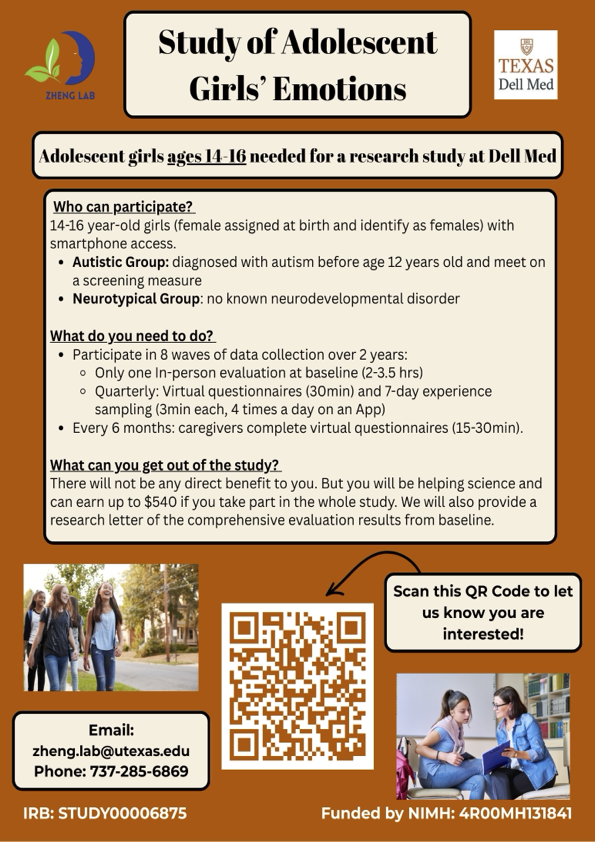
SAGE: Study of Adolescent Girls’ Emotions
What's the study about?
This study is trying to understand why girls with autism are especially likely to experience depression during their teen years. Over two years, we’ll follow teenage girls with autism and without, along with their caregivers, learning about their daily social and emotional experiences through short check-ins on their phones, as well as periodic surveys. The goal is to figure out what social and emotional factors contribute to mental health outcomes in teen girls, so we can eventually develop better, more tailored ways to prevent and treat it.
Who can participate?
-Girls aged 14–16 (assigned female at birth, identifying as she/her)
-For autistic participants: diagnosed with autism before age 12 and meet the cut-off on a screening measure
-Access to a smartphone
-A caregiver willing to participate
What will participants be doing?
-One in-person visit at Dell Medical School (weekdays) or Dell Children’s (weekends), including cognitive testing, a clinical interview about mood, and an autism evaluation (for autistic participants)
-One week of brief daily app-based surveys after every visit
-Seven short remote follow-up sessions over two years
Why is this important?
People with autism are at much greater risk for depression. Girls tend to develop depression earlier and more often than boys, yet we still know very little about what causes depression in autistic teens, especially girls, which makes it hard to create treatments that actually work for them. Studying these girls closely over time can help us understand how these social experiences contribute to depression and ultimately guide the development of better support and treatment. We want to understand both the good things and the challenging things they go through. We also want to learn how these experiences affect their mental health, such as feeling happy, sad, or stressed. We hope this study will help us design and improve social and emotional support for girls in the future.