
Tiny Beginnings, Big Impact: How Early Brain Communication Supports Social Development
What's the study about?
This study explores how communication between different areas of a newborn’s brain supports later social development and may help us understand early pathways to autism.
Who can participate?
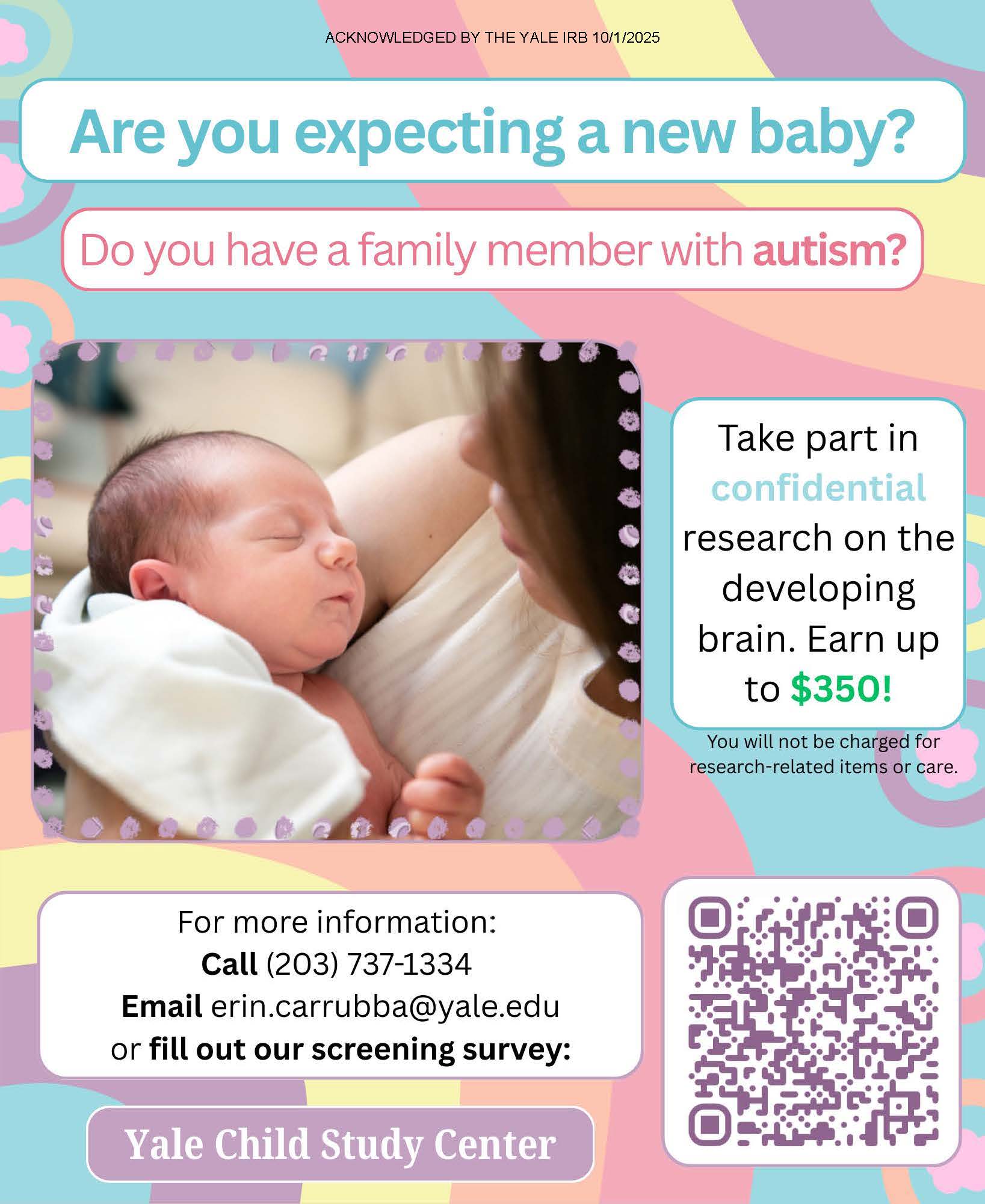
Families with newborn babies up to 6 weeks old may participate. The study includes babies with and without a family history of autism. Family history of autism group includes babies who have parents, grandparents, aunts, uncles, siblings, half-siblings, or cousins diagnosed with autism.
What will participants be doing?
Newborns will be scanned during natural sleep using brain magnetic resonance imaging (MRI). The scan will be conducted by an expert pediatric neurologist. After the scan, the families will be invited back at 4, 6, 12, and 18 months for a follow up. Parents will be asked to complete questionnaires and interviews about their child’s development. The infants will take part in studies of social attention and will undergo an assessment at 12 and 18 months by our expert study clinicians. Parents will have an opportunity to learn about their child’s development and consult our clinical team as needed.
Why is this important?
This study will examine how different regions of the brain communicate with one another during the first weeks of life and how these early patterns of communication relate to later social development. Understanding these early brain mechanisms will help clarify how social abilities emerge and how these processes may differ in children who later develop autism or related conditions. The findings will inform research across multiple areas, including the development of improved early monitoring and intervention tools, better support for families, and ultimately improved outcomes for children on the autism spectrum.