
Understanding Communication and Sensory Experiences in Autistic Adolescents
What's the study about?
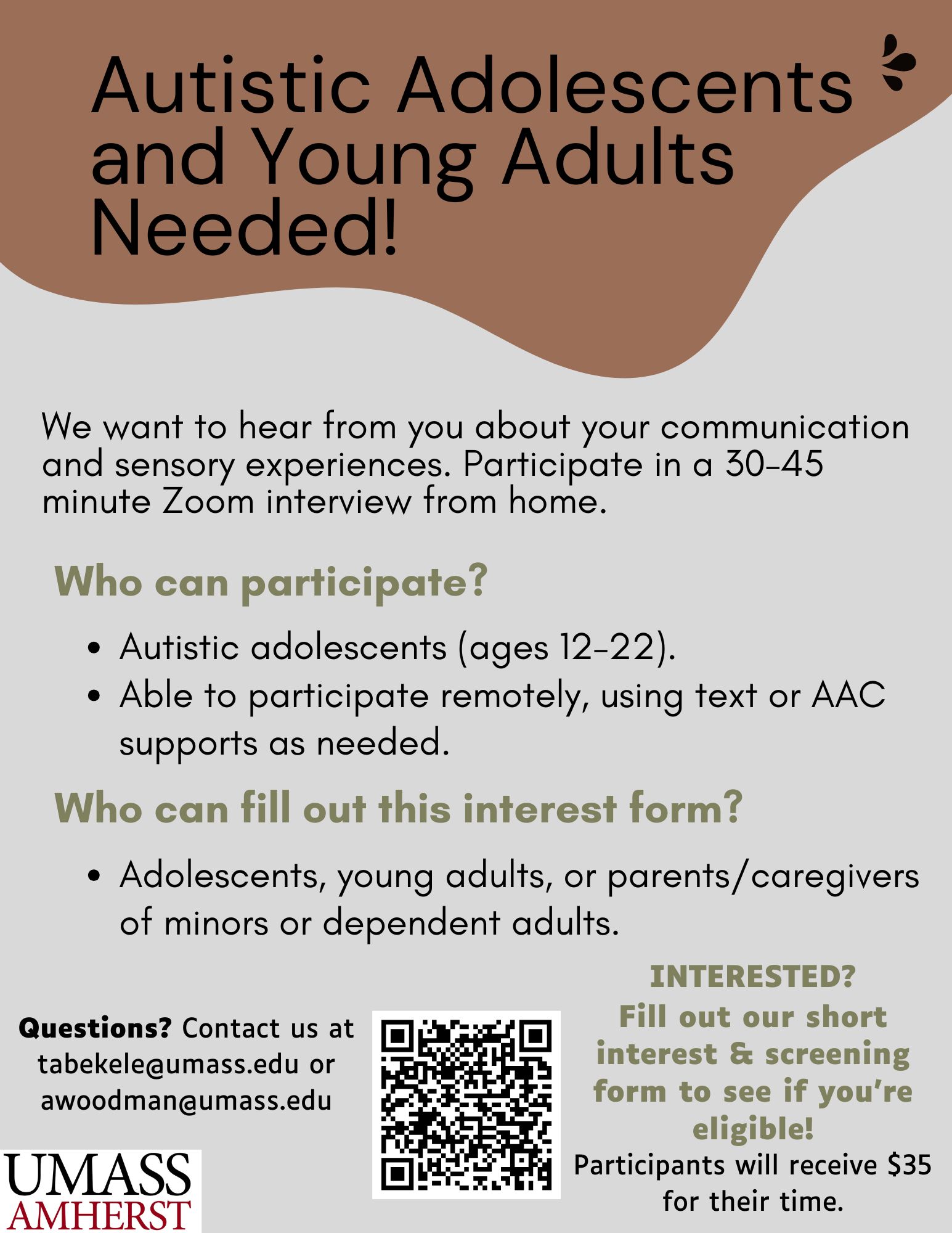
This study looks at what helps and challenges autistic adolescents and young adults in communication and sensory experiences, based on their own stories.
Who can participate?
– Autistic adolescents (self-identified or confirmed by a caregiver) who are between 12-22 years old.
– Able to agree to participate (with parent/guardian consent if under 18)
– Able to communicate using speech, typing, or AAC (assistive communication tools)
– Able to participate in a Zoom video interview.
What will participants be doing?
Participants will take part in a Zoom interview where they will be asked about their communication and sensory experiences. They will share their perspectives on what helps or makes things more difficult, and how these experiences affect their daily lives. The interview will take about 45 minutes.
The interview will be audio and video recorded for research purposes. Video is highly encouraged, but participants may choose to keep their camera off. Audio recording is required so the research team can accurately capture responses. Recordings will only be used by the research team for analysis. If you do not agree to audio recording, you should not participate in this study.
Why is this important?
This study is important because it focuses on autistic adolescents’ own experiences with communication and sensory differences, rather than relying only on outside observations. By understanding what helps and what creates challenges in real-life situations, the study can highlight areas where better supports are needed.
In the future, this research could help inform more accessible communication practices, sensory-friendly environments, and services that are better aligned with autistic individuals’ needs. It may also support educators, clinicians, and families in creating environments that reduce barriers and improve daily experiences for autistic adolescents.