
Using The C.A.U.S.E. Rating Scale to Explore Parental Beliefs Surrounding Autism in Children Diagnosed During/After COVID 19
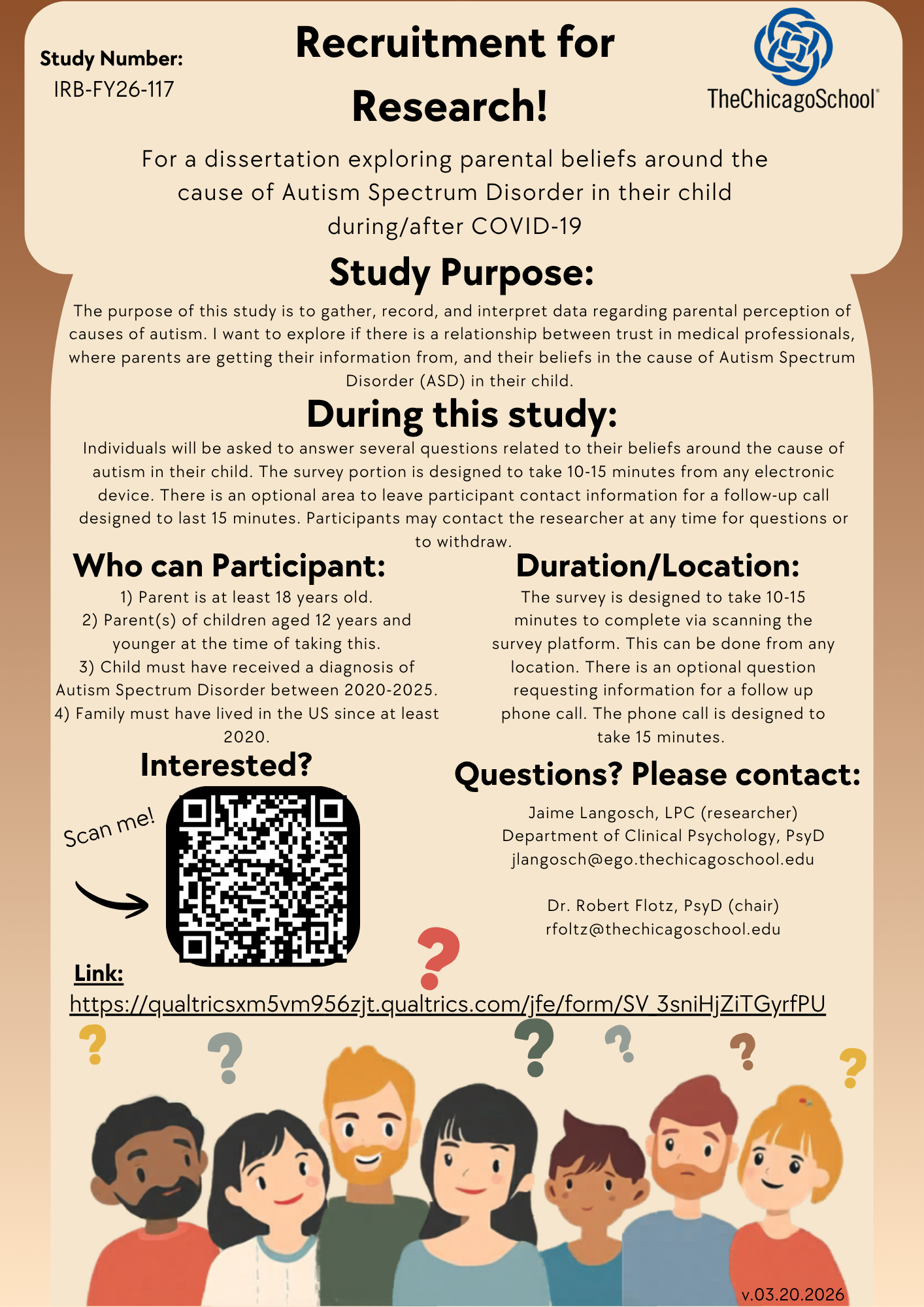
What's the study about?
The purpose of this study is to gather, record, and interpret data regarding parental perception of causes of autism. I want to explore if there is a relationship between trust in medical professionals, where parents are getting their information from, and their beliefs in the cause of Autism Spectrum Disorder (ASD) in their child.
Who can participate?
1) Parent is at least 18 years old.
2) Parent(s) of children aged 12 years and younger at the time of taking this.
3) Child must have received a diagnosis of Autism Spectrum Disorder between 2020-2025.
4) Family must have lived in the US since at least 2020.
What will participants be doing?
Individuals will be asked to answer several questions related to their beliefs around the cause of autism in their child. The survey portion is designed to take 10-15 minutes from any electronic device. There is an optional area to leave participant contact information for a follow-up call designed to last 15 minutes. Participants may contact the researcher at any time for questions or to withdraw.
Why is this important?
Findings from this study contribute to understanding how parents of children diagnosed with ASD during or after the COVID-19 pandemic form their own etiological belief and navigate health-related decisions based on their trust in medical professionals. Specifically, results identifying patterns in parental etiological beliefs and trusted information sources may inform how healthcare providers (ex: pediatrician, primary care physician), teachers, early intervention specialists, and other childcare professionals approach conversations about childhood vaccinations, research backed etiology, and other health care decisions. For example, understanding which sources parents rely on most and trust may help providers tailor communication strategies, anticipate concerns, and provide medically accurate information to support decision-making processes. Findings may also inform public health professionals by identifying how pandemic-era messaging was interpreted by parents. This can then guide professionals on the development of clearer, more responsive health information during any health crises that arise in the future.
By exploring etiological beliefs of parents in the context of a developmental diagnosis like ASD during a global pandemic, this study aims to contribute to understanding how health beliefs are organized and maintained when scientific information is rapidly evolving across multiple sources. A new rating scale has been developed for this purpose. The C.A.U.S.E. Rating Scale was created as a structured approach to examine etiological beliefs that may be extended to other mental health or developmental diagnoses, supporting future research aimed at understanding how causal attributions influence health-related decision-making across contexts, all with the overarching goal of providing parents with research backed, medically accurate information.