
Adolescent Communication of Emotions Study (ACES)
What's the study about?
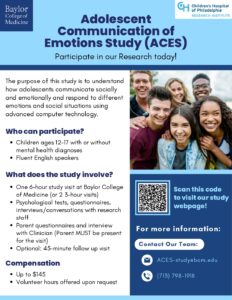
This study aims to understand how adolescents communicate socially and emotionally and respond to different emotions and social situations by using advanced computer technology. This study will help develop better diagnostic tools for individuals with a variety of mental health concerns, including autism, anxiety, and depression.
Who can participate?
- Children ages 12-17 with autism, anxiety, depression, OR no mental health diagnoses
- Fluent English speakers
(1) Families will receive an assessment summary report following their visit, (2) participants will be compensated approximately $145, (3) participants can receive volunteer hours upon request
What will participants be doing?
During a single, 6-hour, in-person study visit, participants will complete a series of general psychological evaluations and interact with research staff on a variety of activities including behavioral and conversation-style tasks, answering questionnaires, and completing computer activities. All research activities will be recorded with small, high-tech cameras used to track facial movements and expressions. A parent or guardian must be present for the visit and will be asked to complete a series of questionnaires as well as a parent-informed interview with a study clinician about their child.
Why is this important?
This study will help us learn more about social-emotional communication amongst teens with a variety of mental health concerns, including autism, anxiety, and depression, and how advanced computer technology can be used to track and measure changes in emotion expression. This study will aid in the development of better, more accurate diagnostic tools for children and teens with autism and a variety of other concerns and help families get better mental healthcare in the future.