
UCLA Autism Genetics Research Study for Black Families
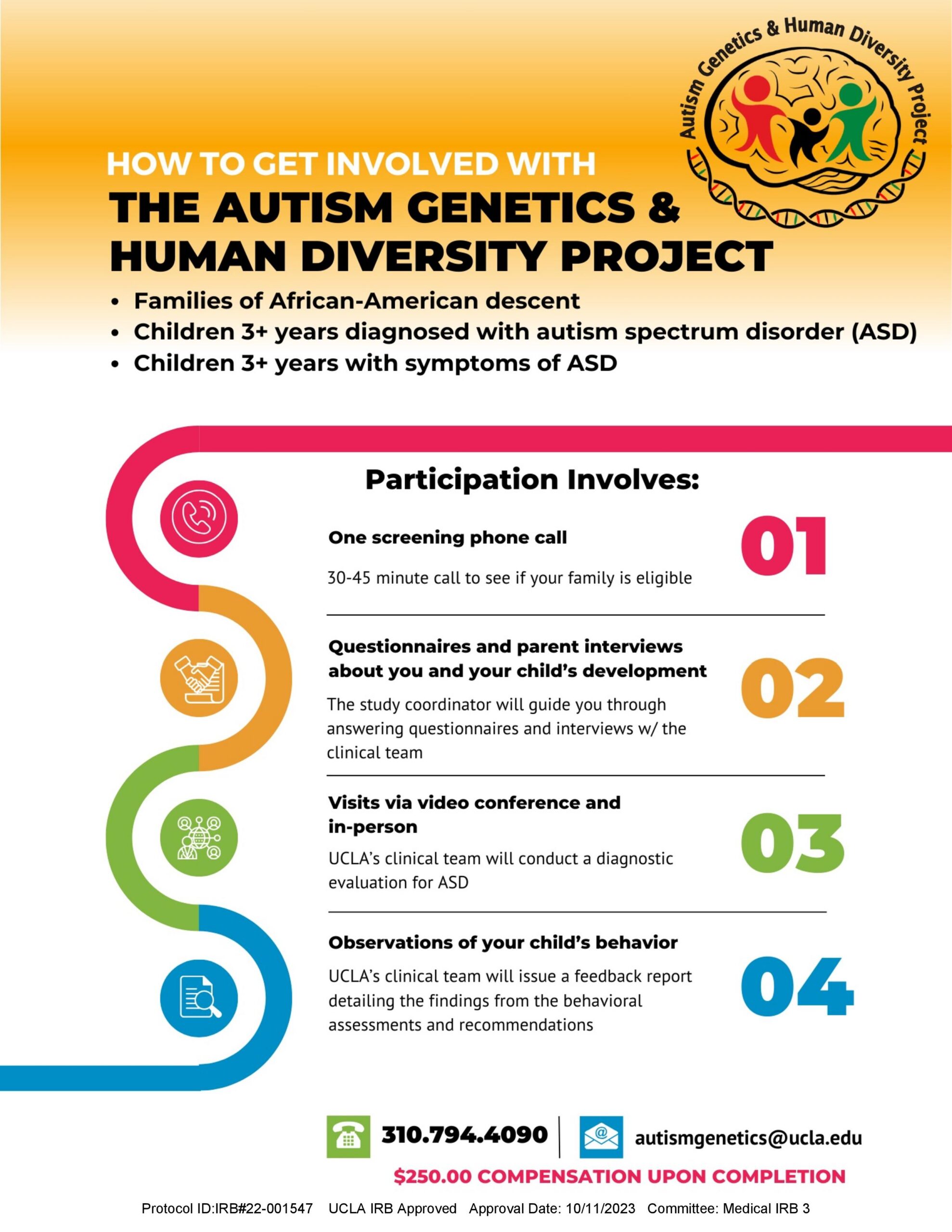
What's the study about?
UCLA’s Autism Genetics and Human Diversity study focuses on increasing representation of black families in autism genetic research. African Americans make up 14 percent of the US population, but less than 10 percent of the individuals who have participated in genetic studies. We and others have growing evidence that the genetic risk factors contributing to ASD in Caucasian families don’t influence ASD the same way in black families: they may be the same genetic factors but have weaker effects, or they might be different genetic factors. We need more black families to participate in research so that we can learn which genetic factors for autism risk are unique to people of African descent and which are the same in all people.
Who can participate?
• Is aged 3 and up and has an autism diagnosis or suspected
• Is African-American or black (Bi-racial is included)
• Has no known genetic disorder (other than 16p and 15q mutations).
• Has never participated in a genetics study on autism
What will participants be doing?
You will be asked to complete questionnaires and interviews regarding your child’s medical history, behavior, social skills, and communication skills. Your child will undergo some behavior and cognitive (intelligence) testing. A blood sample will be taken from your child, biological parents, and any sibling older than 3. For our out-of-state families, we collect saliva.
Why is this important?
Identifying the genes contributing to ASD in Black families lays the groundwork for future studies that can develop new interventions and treatments and tells us more about the biology of autism. Join UCLA’s Autism Genetic and Human Diversity research study to increase representation of Black families in autism genetic research.